
Products
Prepare the concrete (Base Layers)
Seal & bond (Surface Barrier)
Protect & finish (Topcoats & Sealers)
Complete systems (Multi-Layer)
Technical detail (Long Form)
Prepare the concrete (Base Layers)
Seal & bond (Surface Barrier)
Protect & finish (Topcoats & Sealers)
Complete systems (Multi-Layer)
Technical detail (Long Form)
Technical detail
What the product is, what the finish and the sector list do for a building, and the warranty all live on the product page. This page is the working detail from the technical data sheet and the mixing and installation instructions, plus the food processing project that put them to work.
Fortress XD™ is a two-part, pigmented, moisture cured traffic coating applied over CeramycGuard™ Ceramic Surface Treatment. It is self-priming, chemically bonding into the CeramycGuard™ layer, and it suits horizontal or vertical applications. Benjamin Cook, who formulates the chemistry, describes it as polyester hybrid chemistry with organic and inorganic ceramic technologies. The constituent resins are confidential and we do not publish them.
Everything below comes from two documents: the technical data sheet and the mixing and installation instructions. Both are linked at the foot of this page, and both should be in the hands of whoever is holding the roller. Fortress XD is designed for professional use only, and applicators should have proper training before they apply it.
Fortress XD is never applied straight onto concrete. It goes over CeramycGuard™ that is fully bonded, cured, clean and dry, and it is self-priming into that layer. The CeramycGuard™ base must have cured for a minimum of 24 hours at above 55°F and above 45 percent relative humidity before the finish goes on, and all the quality control procedures for CeramycGuard™ have to be completed first. Refer to the CeramycGuard™ technical data sheet and its own installation instructions for that stage.
The base has to be free of every kind of bond breaker: oils, detergents, residues, dirt, debris and any other foreign or unsound material. CeramycGuard™ may be swept, mopped, power washed or auto scrubbed with hot water, but if water is introduced for cleaning it must be allowed to dry fully before Fortress XD is applied. Where incidental contamination happens, from oil, lubricant, detergent or anything else, the area is cleaned properly and all cleaning residue is removed with it. A cleaning agent left behind is itself a bond breaker, which is the one variable that undoes everything above it.
Fortress XD is supplied as three components, plus a Zirconia ceramic slip resistance additive. Part A is the base, Part C carries the ceramic wear additives, and Part B is the hardener. A Jiffy mixing blade and a variable speed drill are the recommended tools.
Part A goes into the mixing container and is mixed alone for 60 seconds with a drill and auger. Part C and the ceramic slip resistance additive go in next and are mixed for 120 seconds, or longer if the additives have not fully incorporated. The entire contents of Part B go in last and are mixed for a further 120 seconds, or until fully incorporated.
Part B must be used exactly as supplied. It cannot be cut back or extended to buy pot life or to change cure times, and a crew that has done that with other two-part systems needs to be told so before it starts. Only mix what can be applied straight away. Where Zirconia ceramic powder is in the mix, it must not be left to stand: if the mixture sits in the container for more than 15 minutes it will begin to firm up, so remix it for 60 seconds on a slow speed drill with a Jiffy blade to keep the ceramic properly suspended rather than settling out of the film it is there to harden.
Ambient and substrate temperature both need to sit between 55°F and 85°F, with relative humidity between 30 and 85 percent, and both are verified before any mixed material is opened. This is a moisture cured coating, so humidity changes how it behaves and high humidity can shorten pot life. The technical data sheet adds a dew point rule that is easy to miss on a cold morning: do not apply within 5°F of the dew point, and do not apply if the temperature will fall to the dew point at any time inside the 24-hour curing window.
Substrate cleanliness is verified again immediately before application, and the material is remixed just before it goes down. Application is by soft-woven, shed-free roller cover with a 3/8 inch nap, cutting in the perimeter first with a brush or a mini roller. A high-capacity cotton blend fiber roller must not be used. Fortress XD can be applied by dip and roll or by pour and roll.
Typical build is 8 to 10 mils wet film thickness, though project requirements vary, and it is checked at regular intervals with a wet film thickness gauge rather than judged by eye. A notched squeegee or a flexible epoxy squeegee may be used to help spread the material to the intended thickness. Where a squeegee is used, the crew has to watch for additives agglomerating on the leading edge, because uneven additive distribution means uneven physical properties and uneven slip resistance across the floor, which is a safety outcome and not a cosmetic one. Each area gets a final back roll before the crew moves on, in one consistent parallel direction across the whole application. Anyone who has to cross a coated area before initial cure wears shoe spikes.
Coverage is up to 200 sq ft per gallon at 8 mils on a smooth floor, and roughly 300 sq ft per 1.5-gallon kit at the standard 8 to 10 mil build with the ceramic additives and non-skid elements included. A porous or absorbent substrate takes more, so square footage is a function of depth, additives and the non-skid profile specified. Zirconia customer service will run the calculation for a given project, and the installer must check with them before introducing any unspecified aggregate or non-skid element, which is generally unnecessary given the integral slip resistance.
The coating is dry to touch in about 6 hours at 70°F and will take foot traffic at 12 to 16 hours. Protect it from water for a minimum of 24 hours, and keep foot traffic and equipment off it until it has cured, using approved barriers and signage to block the area for at least 16 hours. Initial walk-on cure is at 24 hours. From there it keeps hardening and densifying over the following 7 to 10 days to reach drive-on cure, and continues to densify across roughly a 30-day period, though that last stage is largely unnoticeable.
Temperature and humidity should be monitored through the cure, not just at the moment of application. Zirconia advises a HOBO air temperature and humidity meter, or similar, so the conditions the floor actually cured in are evidenced rather than estimated.
Where a second coat is specified, it goes on inside the recoat window of approximately 24 hours, which moves with environmental conditions. Outside that window the first coat has to be sanded with 60 to 80 grit, then swept or vacuumed and wiped down before the second coat is applied.
Cured, the film measures a Shore hardness of 75.5 on an 8 mil film, a coefficient of friction greater than 0.65, and a dry film thickness greater than 8 mils per coat across one or two layers. In the can it is a high solids material, above 90 percent by weight, with VOC below 100 g/L and zero hazardous air pollutants. The full table is below, and the data sheet carries the safety and handling detail this page does not reproduce.
Maintenance is deliberately ordinary. Keep dust and debris off the surface with a broom, a vacuum or whatever suits the building, and clean on a regular basis with a mild, environmentally approved surfactant. The surface is dense enough that this is all it asks for, which is the point of specifying it.
Project spotlight
A fruit drink manufacturer was losing the concrete in its original plant. The floors had gone slippery and had become impossible to clean, and the epoxy that was supposed to be protecting them kept failing, in some cases needing replacement in as little as six months.
The cause was the product they make. Acids and sugars from the fruit concentrate, plus the water and detergents of a daily cleaning cycle, are a serious load for older floor coating technologies. The epoxy disbonded from the concrete and also failed from the surface down, tearing apart under chemical erosion and physical wear. Once the coating had gone, the acids and sugars went to work on the slab itself, eroding the concrete near the floor drain and creating exactly the slippery conditions the floor was meant to prevent. The deteriorated concrete and the food residue in it then made good conditions for microbial growth and microbial corrosion.
This is a common shape of failure for epoxy, because epoxy does not chemically bond with concrete. It holds on with a temporary adhesion bond, and an adhesion bond is a bond that can be lost.
When the manufacturer built its new facility, it wanted a floor that would survive the environment without regular coating replacement and concrete repair, with good non-slip properties and an easy clean. Fortress XD™ went down over the CeramycGuard™ base. More than a year after installation the coating was performing well, the facilities manager was happy with both the performance and the installation, and the company specified the same finish for two further plants.
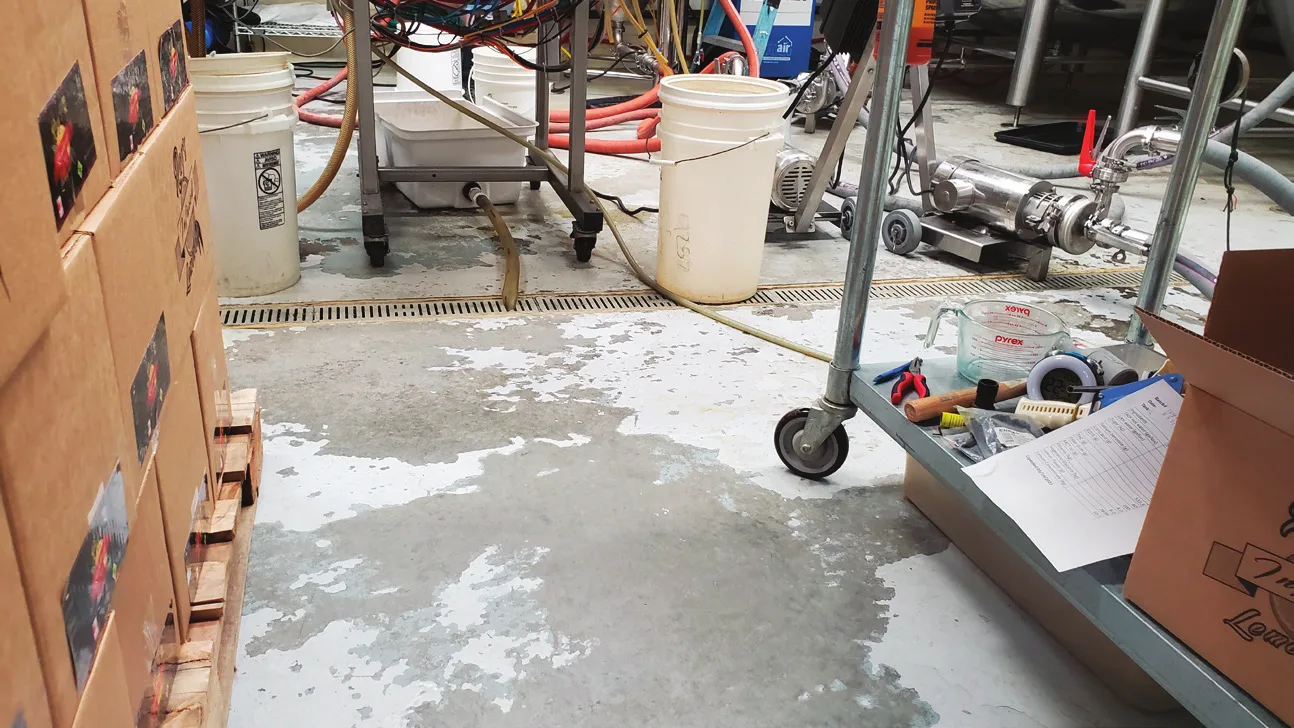
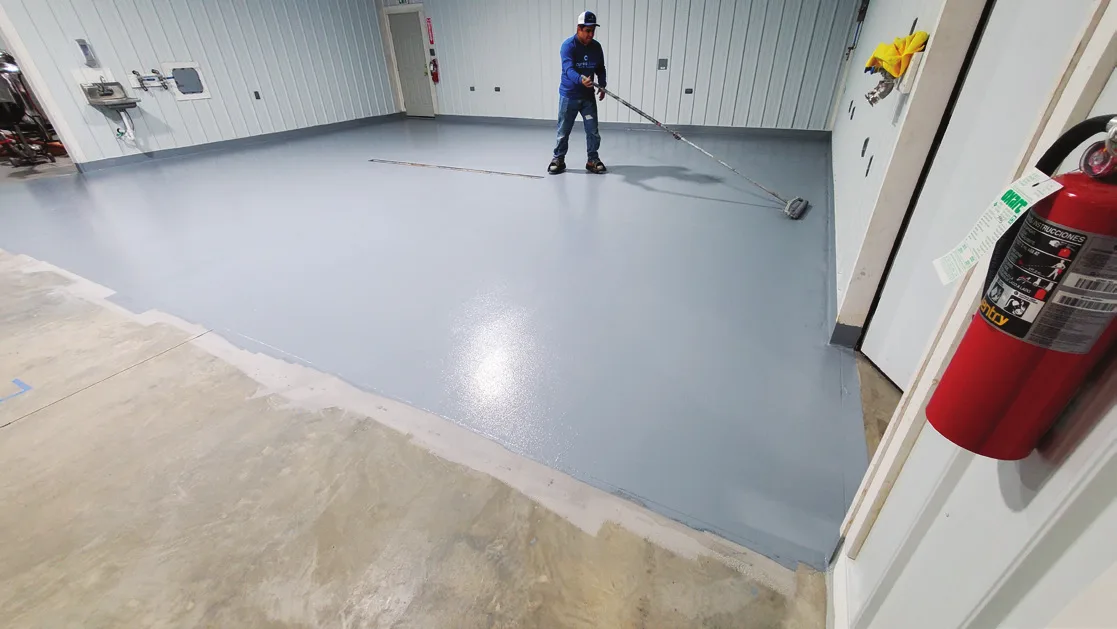
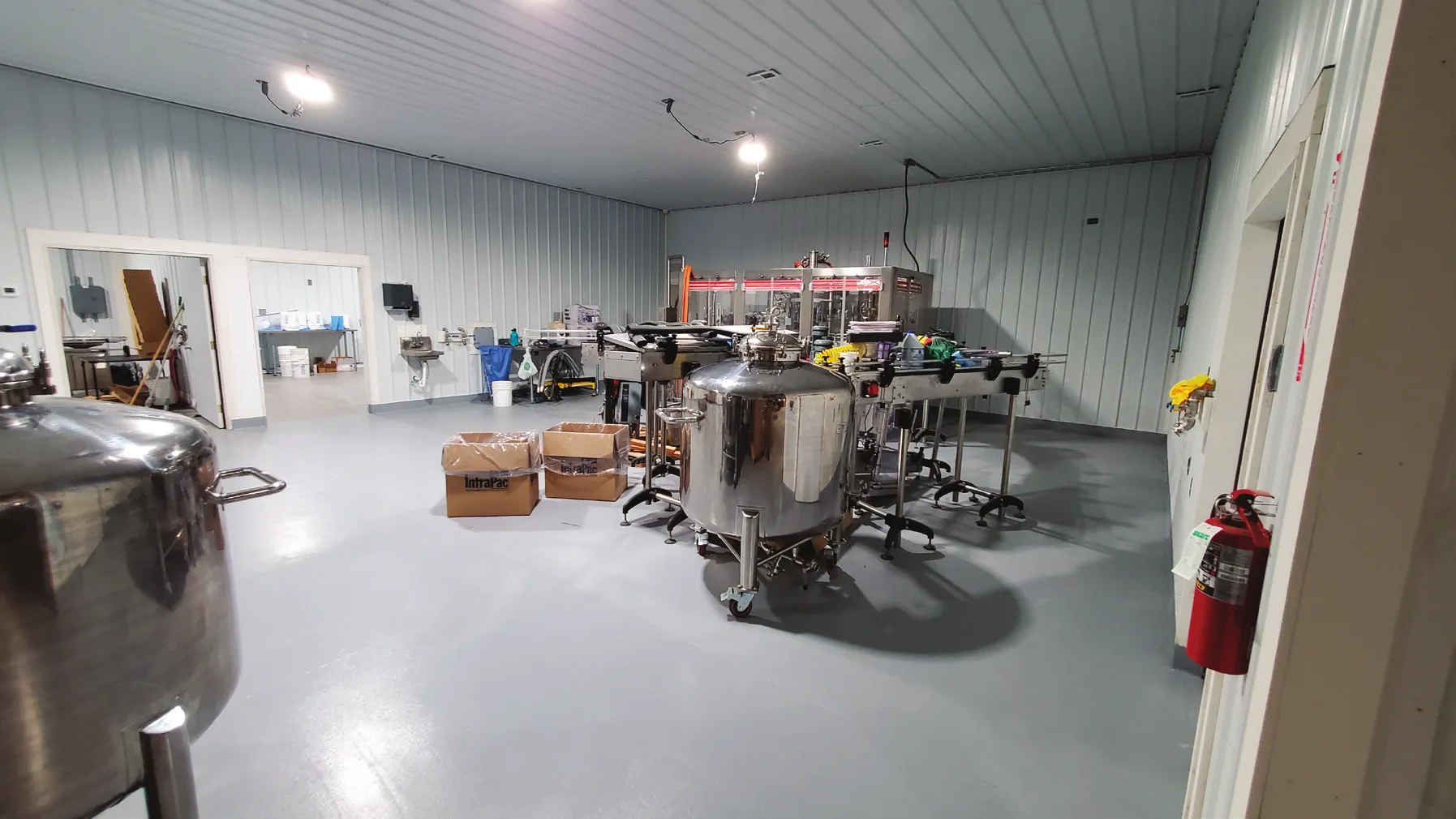
The full project spotlight is available as a PDF below. It was written before the renaming, so it carries the product's retired name; the product is Fortress XD™.
Fortress XD documents
Back to the Fortress XD™ Floor Finish page What the finish is, the composite system it belongs to, the engineered non-slip profile, where it is specified, and the 15-year warranty.
Questions
No. It is applied over CeramycGuard that is fully bonded, cured, clean and dry, and it is self-priming into that layer. The CeramycGuard base must have cured for at least 24 hours at above 55°F and above 45 percent relative humidity first, and all the quality control checks for CeramycGuard have to be completed before the finish goes on.
No. Benjamin Cook, who formulates the chemistry, states it as polyester hybrid chemistry with organic and inorganic ceramic technologies. Older documents describing it as a urethane are out of date. The constituent resins are confidential and we do not publish them.
The installation instructions call for ambient and substrate temperature between 55°F and 85°F, with relative humidity between 30 and 85 percent. The technical data sheet adds that the product must not be applied within 5°F of the dew point, or where the temperature will fall to the dew point inside the 24-hour curing window. This is a moisture cured coating, so humidity is a working variable, not a footnote, and high humidity can shorten pot life.
It is dry to touch in about 6 hours at 70°F and takes foot traffic at 12 to 16 hours. Initial walk-on cure is at 24 hours, and the coating continues to harden over the next 7 to 10 days to reach drive-on cure. Keep water off it for the first 24 hours, and keep the area blocked off with approved barriers and signage for a minimum of 16 hours.
No. Part B must be used exactly as it is supplied, and it cannot be cut back or extended to change pot life or cure times. Only mix what can be applied straight away. Where Zirconia ceramic powder is in the mix and it stands for more than 15 minutes, remix it for 60 seconds on a slow speed drill with a Jiffy blade so the ceramic stays in suspension.
Generally not. The slip resistance is integral to the coating and the non-skid materials are added only to the actual surface layer, so the installer must check with Zirconia customer service before introducing any unspecified aggregate or non-skid element. Measured coefficient of friction is greater than 0.65.
Talk to our technical team about the right stack for your slab, your traffic and your washdown regime.