Porosity
Concrete's open pore network lets water, salts and contaminants travel inward, attacking the cement binder that protects the reinforcing steel.

Prepare the concrete (Base Layers)
Seal & bond (Surface Barrier)
Protect & finish (Topcoats & Sealers)
Complete systems (Multi-Layer)
Technical detail (Long Form)
Technology
Concrete is porous and chemically unstable. Traditional coatings peel. Zirconia's Ceramic Surface Treatment chemically bonds with concrete, forming a durable, non-porous composite that dramatically extends the life of the asset.
Concrete is one of the most widely used building materials in the world. It is strong, versatile and durable under the right conditions. But it has two fundamental weaknesses: porosity and chemical instability. Together, they let water, salts, acids and carbonation penetrate the surface, break down the cement binder that protects the reinforcing steel, and weaken the entire structure from the inside out.
Most coatings applied to address this problem do not solve it. Epoxies and urethanes are organic, plastic-based coatings that rely on surface adhesion rather than chemical bonding. They peel, blister and delaminate, especially under freeze-thaw cycling, UV exposure and moisture pressure. The result is a maintenance cycle that is costly, disruptive and never truly finished.
Zirconia's approach is different. By chemically bonding a ceramic composite directly to the concrete surface, the treatment becomes part of the structure rather than a film sitting on top of it.
The four practical challenges
Concrete's open pore network lets water, salts and contaminants travel inward, attacking the cement binder that protects the reinforcing steel.
Modern hydrating cements are chemically active. Without protection, carbonation, chlorides and acids steadily break down the binder, weakening the structure.
Epoxies, urethanes and other organic coatings rely on mechanical grip (surface roughness, or 'tooth') rather than a chemical bond. Because they do not bond chemically, moisture and thermal cycling cause them to peel.
Unprotected concrete follows a build-corrode-demolish-repeat cycle. Each replacement carries a heavy financial and carbon cost that a durable treatment avoids.
Zirconia protects concrete from corrosion using Ceramic Surface Treatment (CST) technology. CeramycGuard™ is the foundation of that system: an inorganic alumina-zirconia-silicate ceramic treatment that reacts with the concrete surface and chemically forms a new composite layer. The result is a man-made analog of granite: non-porous, biologically inert, and highly resistant to the agents that drive concrete corrosion.
Because the coating chemically bonds rather than adheres mechanically, moisture and temperature changes cannot cause it to delaminate or peel. It re-bonds cracks up to roughly 5 mm wide, seals both new and existing concrete, restores damaged assets, and durably extends the service life of infrastructure.
CeramycGuard™ also serves as the base coat for extended systems used on wastewater treatment structures, bridge decks, industrial floors, and coastal infrastructure.
For reinforced bridge decks, parking structures and marine decks specifically, the dedicated treatment is ConcreteCare CS-42™, the Bridge Deck Longevity System.
Design teams writing this into a project manual can use the CSI specification for CeramycGuard™.
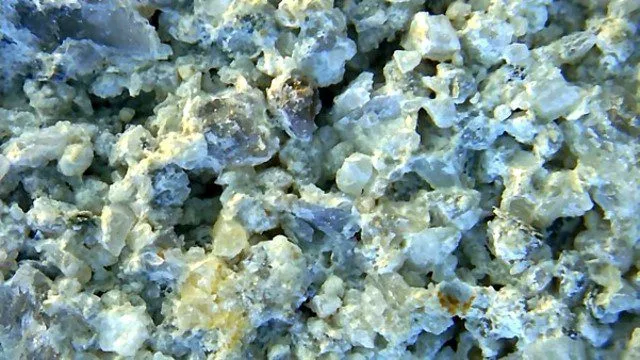
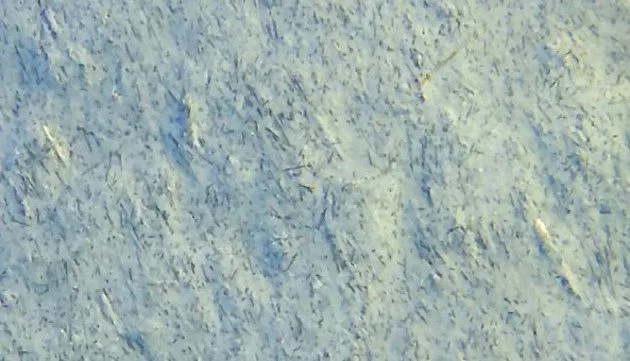
Under the microscope (50x)
Our concrete protection systems
The core alumina-zirconia-silicate ceramic surface treatment. Applied by brush and roll, it chemically bonds with concrete to form a non-porous, granite-like composite layer.
A penetrating treatment for existing concrete that rebuilds the binder as C-A-S-H (a denser, more durable form of the cement binder) and fills the internal capillary void space, adding a second line of defense against moisture ingress.
An alumina-doped colloidal treatment that builds C-A-S-H in fresh concrete from day one and densifies the new slab. That lets CeramycGuard™ be applied in 5 to 7 days instead of 28.
Download product documentation
Request technical documentation or talk to our team about specifying the right ceramic protection system for your concrete asset.