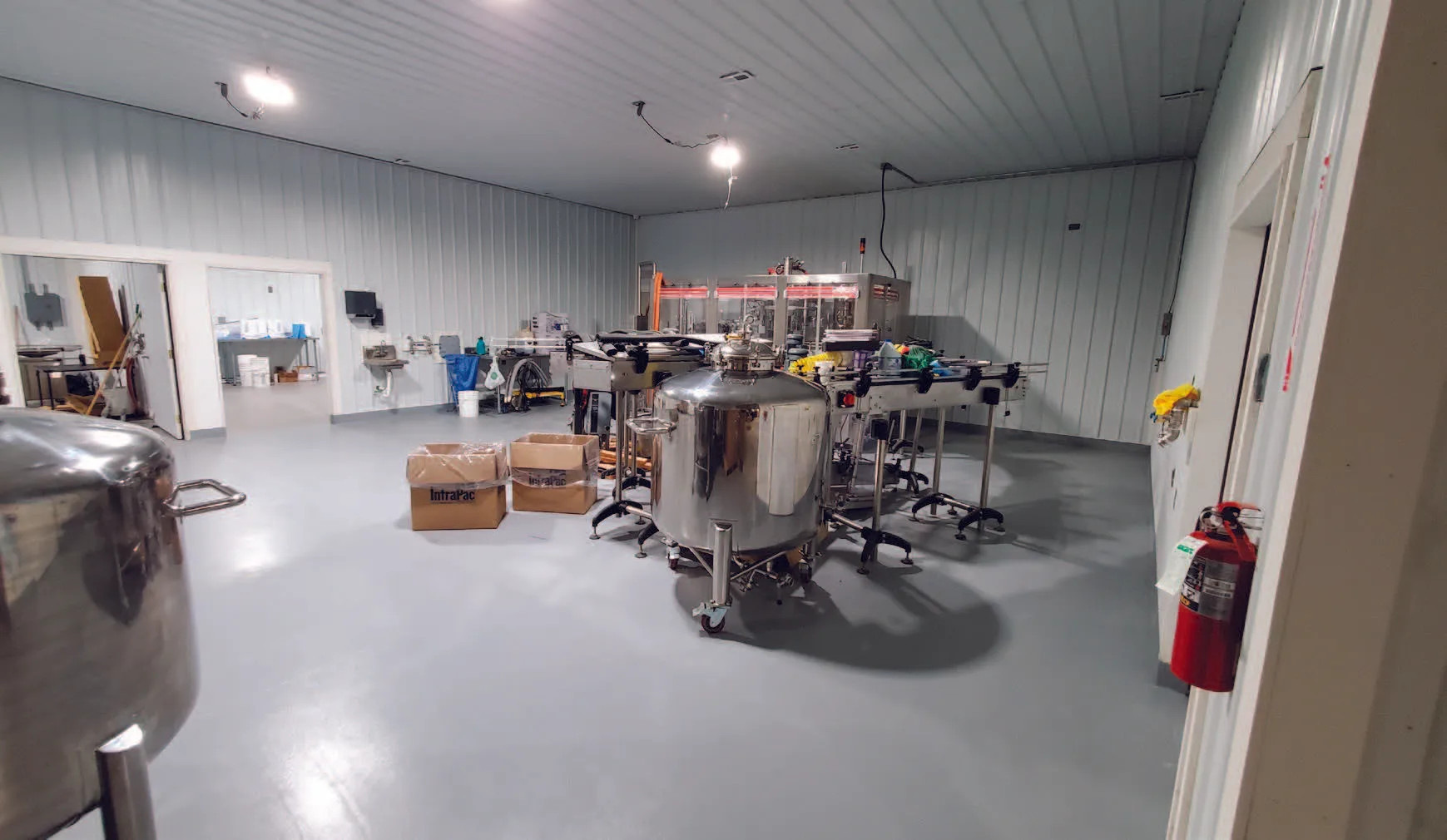
Food manufacturing
Food & beverage manufacturing
Acid-resistant, biologically impervious floors for food processing and beverage production.

Prepare the concrete (Base Layers)
Seal & bond (Surface Barrier)
Protect & finish (Topcoats & Sealers)
Complete systems (Multi-Layer)
Technical detail (Long Form)
Inorganic ceramic coating technology
Zirconia's CeramycGuard™ does more than coat the surface. Where corrosion has taken the cement that holds concrete together, it puts it back, re-bonding elements into the matrix and leaving a hard, granite-like surface that will not peel or delaminate.

“A great development of materials, which is simple to use and meets multiple applications.”
The problem
Water, salt, carbonation and acids travel through the pore network and attack the concrete from within, breaking down the cement binder that protects the reinforcing steel. As the binder degrades, the steel corrodes, and the structure cracks, spalls and slowly fails. This is not a coatings problem. It is a chemistry problem, and it takes a chemistry solution.
Restore. Protect. Preserve.
The Zirconia approach begins beneath the surface. An alumina-doped colloidal treatment penetrates the concrete and rebuilds its chemistry into a denser, more stable state before the ceramic layer goes on. Competitor coatings sit on whatever the concrete happens to be. Ours bond to a substrate we have already engineered to receive them.
We reconstruct the cement paste itself. The alumina-doped colloidal chemistry consumes the weak phase of the matrix and rebuilds it as C-A-S-H, the durable, corrosion-resistant form of the binder, denser and more cross-linked than before.
We protect the cement structure from chemical attack. The restored matrix resists the carbonation, chloride and acid that break concrete down, and re-bonds dormant (non-moving) cracks up to roughly 5 mm wide with CeramycGuard so there is no path back in.
We preserve the concrete long term. CeramycGuard™ finishes the restoration rather than sitting on top of it: it replaces the cement corrosion has taken, re-bonds elements into the matrix, then grows into the restored surface as one continuous ceramic network. There is no interface to peel, flake or delaminate, because there is no interface at all.
Restore, protect, preserve: one continuous chemistry, from inside the concrete out to the surface.
One system. Three stages.
Restore, protect, preserve is the principle. This is how it is delivered: penetrating treatments rebuild the concrete, a ceramic surface treatment protects it, then a topcoat finishes it for the environment it lives in. Products are selected by asset type and exposure, not sold as one size fits all.
Penetrating alumina-doped treatments that rebuild the concrete matrix from within, converting the weak, corrosion-vulnerable phases of the cement paste into C-A-S-H, the durable, cross-linked, chloride-resistant form of the binder.
ActiveCure™ is a colloidal curing agent for new concrete. It is applied once the slab is firm enough to walk on without leaving footprints, usually 4 to 12 hours after the pour. It locks the mix water into the concrete, drives full hydration and starts building a denser, harder surface from day one.
PoreBlocker™ is a deep-penetrating restoration treatment for existing concrete. It binds chloride as Friedel's salt, held by the concrete's alkalinity, restores the high pH around the reinforcing steel, converts vulnerable free lime into stable C-A-S-H and densifies the pore network. For aged, exposed or damaged concrete.
The ceramic surface treatment. It chemically bonds to the restored concrete and forms a granite-like ceramic composite in the Roman cement lineage.
CeramycGuard™ carries Miami-Dade NOA 24-0626.03. It repels chloride, binds what does reach it as Friedel's salt, resists carbonation, is UV stable and stays cleaner in salt and humid environments. It heals dormant (non-moving) cracks up to roughly 5 mm wide.
Environment-specific finishes that chemically integrate with the CeramycGuard base, each engineered for a particular exposure: abrasion, acid, submersion, fire or thermal load. With CeramycGuard these make up the TruComposite™ system family.
BulletProof™, a durable crosslinking topcoat with abrasion and chemical resistance for heavy industrial floors.
Fortress XD™, a ceramic-reinforced polyester hybrid traffic and floor finish.
AquaGuard™, a glassified seal formed over cured CeramycGuard, for wastewater and industrial assets under regular liquid-water exposure.
CrossLinker™, a tie coating that bridges the inorganic ceramic base to organic finishes such as epoxy and urethane.
CG HeatShield™, a thermal barrier for fire and extreme radiant heat, third-party tested to a Solar Reflectance Index (SRI) of 70.
A two-stage penetrating treatment for DOT bridge decks, parking structures and marine infrastructure. Stage 1 soaks into the deck, fills micro-cracks and rebuilds the concrete from the inside. Stage 2 seals the surface without forming a film, preserving skid resistance. Together they cut chloride diffusion by about 50% when tested to ASTM C1556, and extend service life by decades. The full system is typically installed in a single overnight closure, with the deck reopening to traffic within 24 hours.
Full technical data sheets for every product are on the TDS page.
Chloride
Chloride is the main driver of corrosion in reinforced concrete. Salt spray, de-icing brine, desalination effluent and coastal groundwater all drive chloride toward the reinforcing steel. Once it arrives, corrosion begins. Zirconia's chemistry stops chloride two ways at once.
Untreated concrete is calcium-rich and carries a net positive surface charge that attracts negatively charged chloride ions and pulls them inward toward the steel. When Zirconia's chemistry converts the free calcium into the C-A-S-H aluminosilicate network, that surface charge flips negative. Chloride is no longer attracted, it is repelled.
Any chloride that does reach the treated matrix is captured. Reactive aluminate sites in the restored C-A-S-H network bind free chloride into Friedel's salt, a stable, inorganic phase that cannot migrate. That binding holds for as long as the concrete stays alkaline, above roughly pH 9, which is why restoring and holding pore-water pH matters as much as the binding itself.
The surface repels chloride, the matrix captures whatever gets in, and pore-water pH stays in the passivating range (around 11.5 to 12.5) that keeps reinforcing steel protected. This is chemistry restoration, not a barrier film.
Coastal and marine structures, desalination corridors, DOT bridge decks, parking structures, wastewater and reservoir concrete. CeramycGuard carries Miami-Dade NOA 24-0626.03.
To specify a system for a chloride-exposed asset, talk to our technical team.
Why it does not peel
Epoxies and urethanes stick to concrete mechanically. They grip the surface, and a grip can be broken by moisture, movement or time, which is why coatings peel and delaminate. CeramycGuard does not grip the concrete, it reacts with it, forming a chemical bond into the matrix so there is no interface to fail. Adhesion is a mechanical answer to a chemical problem.
How chemical bonding beats adhesion →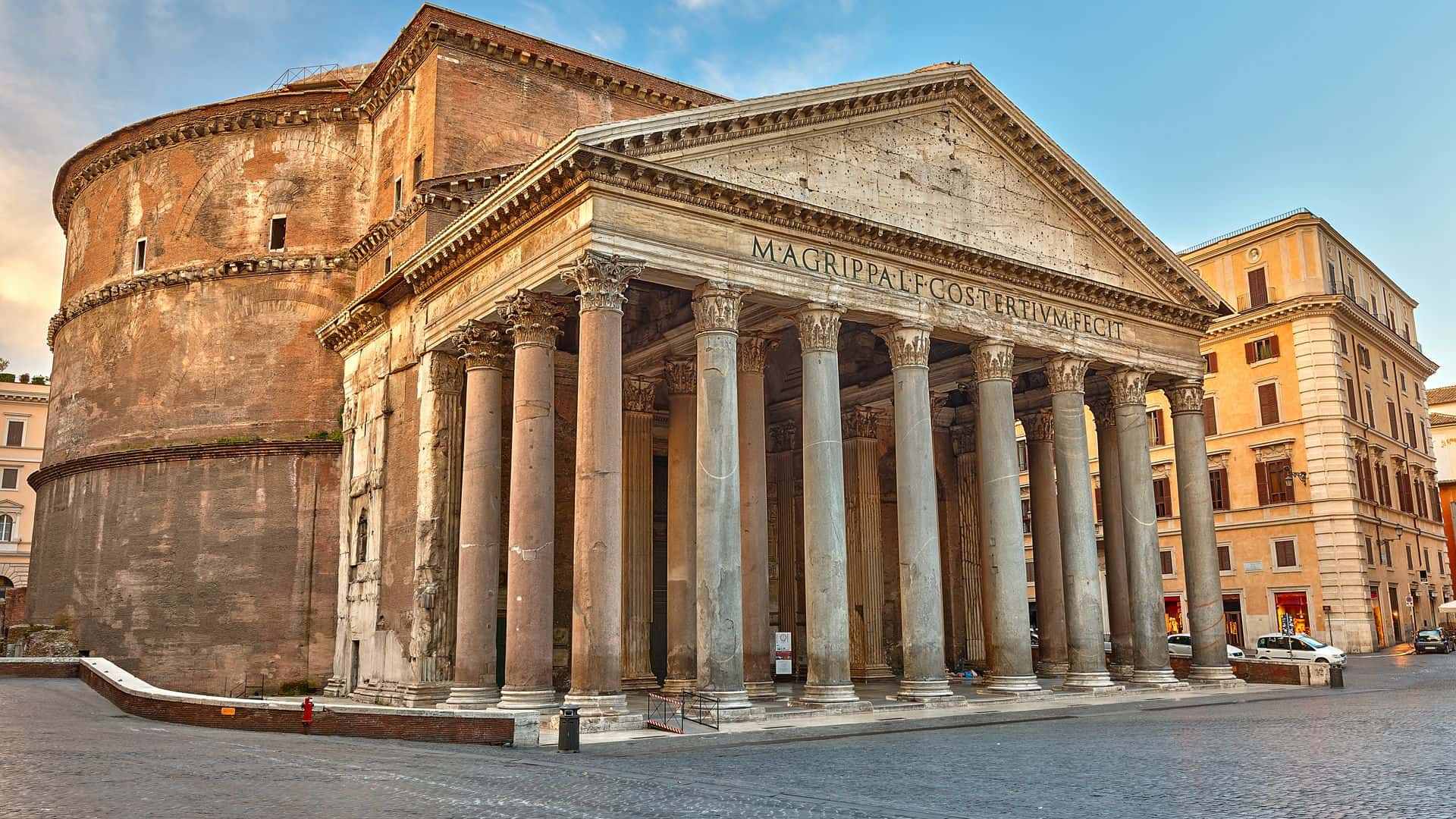
Roman cement reborn
CeramycGuard is based on micronized Roman cement technology, an alumina-zirconia-silicate geopolymer combined with modern nano-scaled ceramic elements. It does two things at once. First it replaces the cement lost to corrosion and re-bonds the matrix. Second it forms a granite-like ceramic surface that chemically bonds to the substrate it has just restored.
This granite-like surface seals the pore network, re-bonds dormant (non-moving) cracks up to roughly 5 mm wide and restores the surface. It draws on the same geopolymer cement chemistry the Romans used to build structures still standing today.
Industrial coatings
Using CeramycGuard as a base layer with inorganic-organic hybrid topcoats, Zirconia builds coating systems that chemically bond to concrete and deliver performance beyond what epoxy topcoats offer.
Becomes part of the substrate. Will not delaminate like epoxy or urethane topcoats.
A dense ceramic surface, non-porous to liquid, with no free calcium hydroxide for acid-producing bacteria to attack. Used in food and biosecurity environments.
Resists biogenic sulfuric acid, organic food and beverage acids, dilute mineral acids and atmospheric acid deposition. For concentrated mineral acids, hydrofluoric acid or continuous immersion, contact our technical team.
Engineered traction that is bonded in, not a sacrificial coating sitting on top.
A hard ceramic surface that stands up to traffic, abrasion and freeze-thaw cycling.
Binds incoming chloride as Friedel's salt and holds the concrete alkaline, protecting reinforced structures in coastal and desalination environments.
Proof in the field
Acid-resistant, biologically impervious floors for food processing and beverage production.
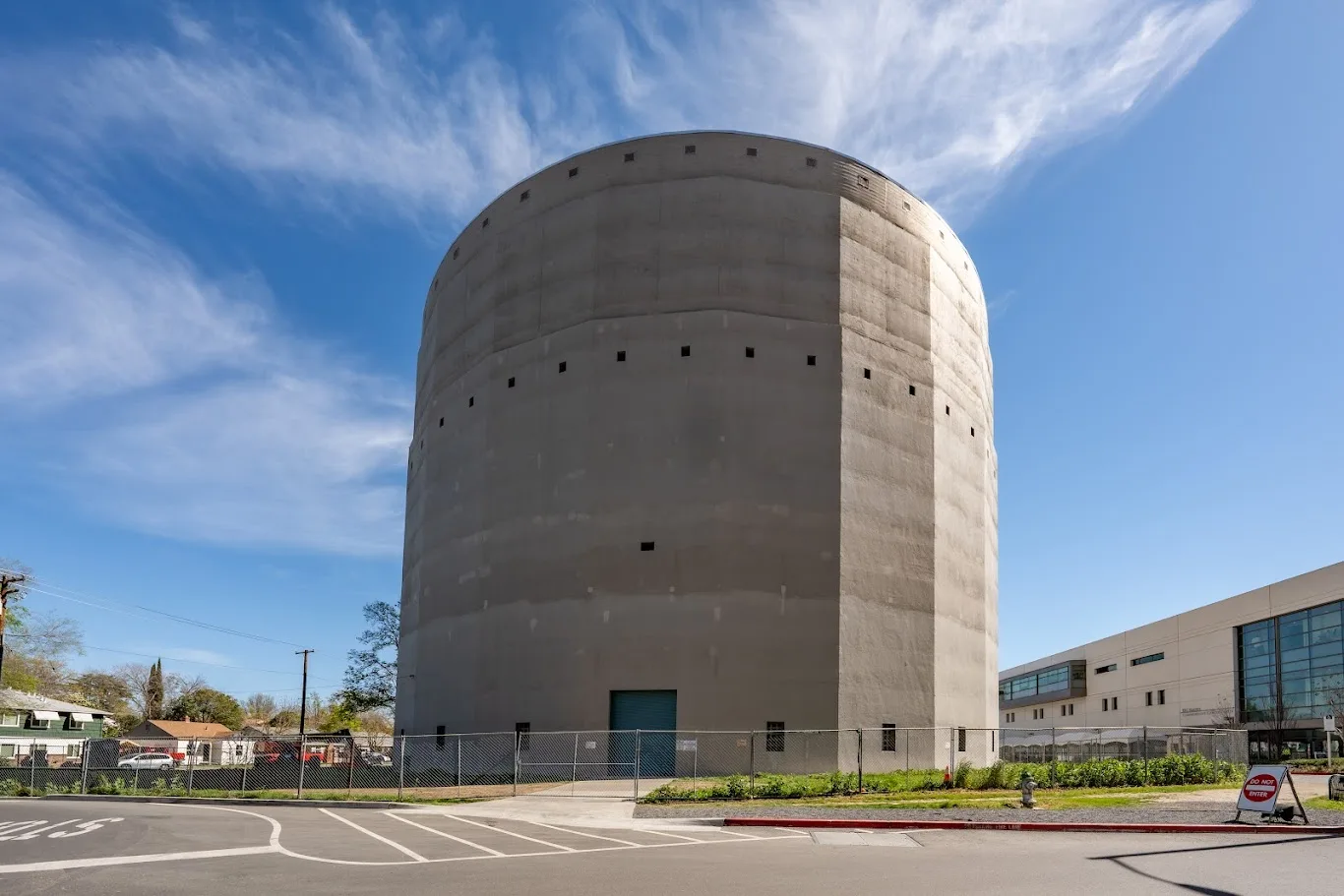
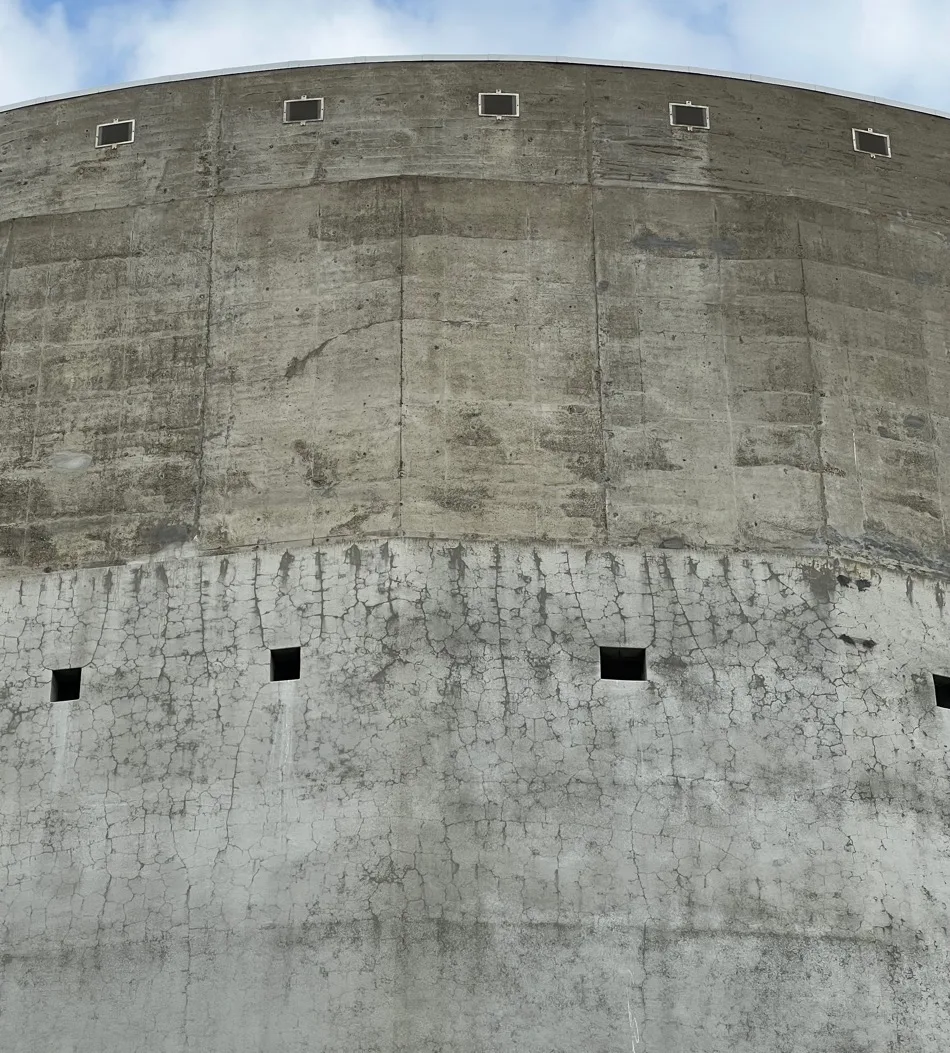
Corrosion reversed on a municipal water reservoir and the concrete asset durably protected against carbonation and salt.
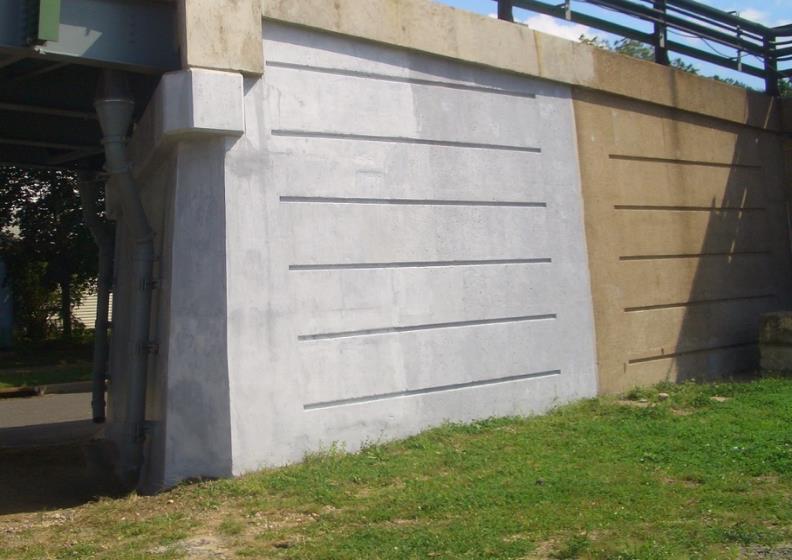
For humid, salty environments like Florida and the Middle East, where salt and biological growth attack concrete at once. The restored surface resists both.

A high-temperature glass-phase system that shields concrete from fire, radiant heat and thermal shock.
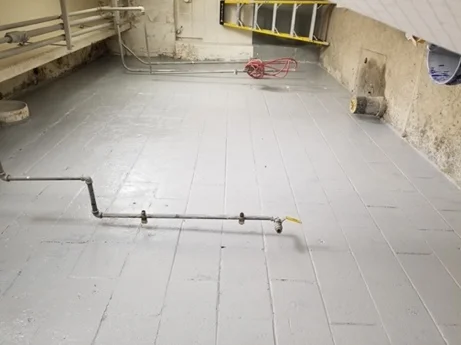
In wastewater and sewers, bacteria turn sulfide into sulfuric acid that eats concrete. A restored matrix leaves no free calcium hydroxide for that acid to attack, so there is no target for microbial corrosion.
Our team can specify the right system for your asset and its exposure.
Questions
An inorganic, alumina-zirconia-silicate ceramic coating that chemically bonds with concrete to form a granite-like surface. Geopolymers are inert, so the surface is immune to carbonation and UV, and it resists salt, corrosion and freeze-thaw.
Epoxies and urethanes adhere to the surface and can delaminate. CeramycGuard chemically bonds and becomes part of the concrete, so it does not peel and dramatically extends the life of the asset.
New and existing concrete infrastructure: reservoirs, bridges, food and beverage facilities, data centers and coastal structures exposed to salt corrosion.
Yes. The restored matrix leaves no free calcium hydroxide for acid-producing bacteria to attack, and the ceramic surface is dense and non-porous to liquid. It also resists the acids found in food processing environments.
It ends chloride corrosion through two mechanisms, chloride ion repulsion and Friedel's salt binding, and holds pore-water pH in the passivating range (around 11.5 to 12.5) that keeps reinforcing steel protected. Carbonation cannot propagate through a fully restored C-A-S-H matrix. Chloride is repelled at the surface and bound as Friedel's salt inside the matrix, so long as the concrete stays alkaline.