Water and wastewater
Reservoirs, tanks and treatment structures exposed to constant moisture and chemical attack.

Prepare the concrete (Base Layers)
Seal & bond (Surface Barrier)
Protect & finish (Topcoats & Sealers)
Complete systems (Multi-Layer)
Technical detail (Long Form)
Seal & bond
The inorganic ceramic surface treatment that chemically bonds with concrete and turns its surface into a granite-like skin that resists the causes of corrosion.
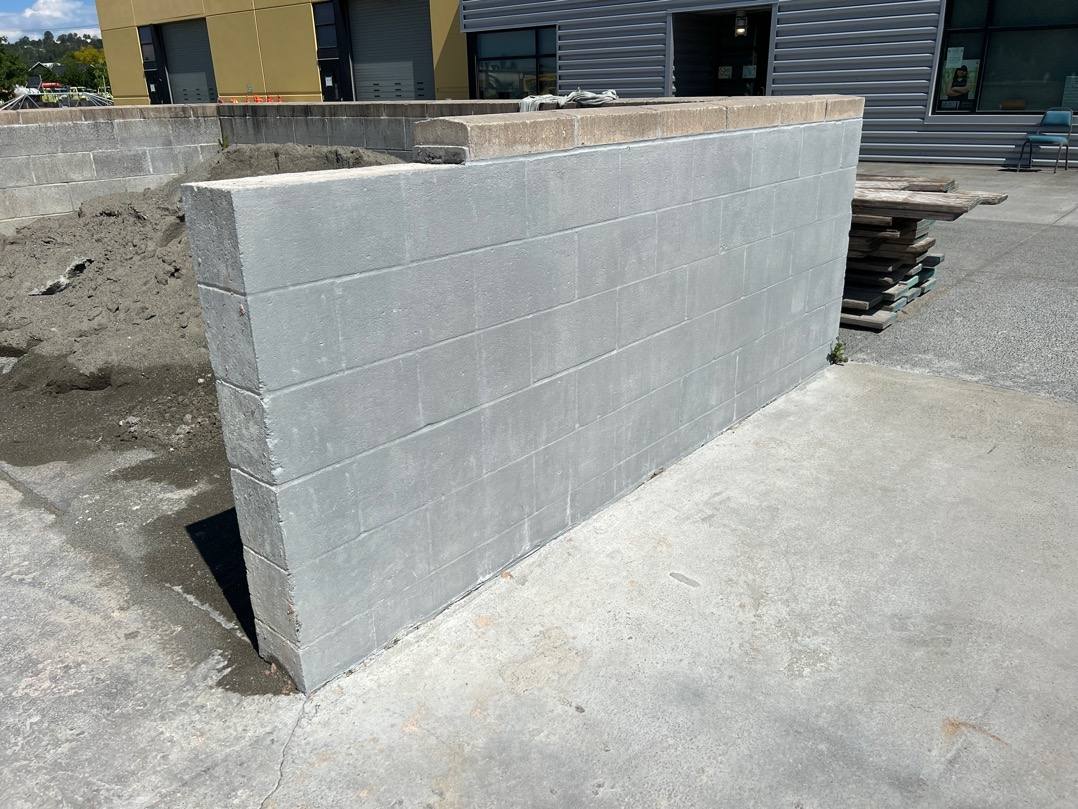
Concrete is porous, and that porosity lets water, salts and carbonation attack the concrete from within, breaking down the cement binder that protects the reinforcing steel. CeramycGuard™ seals the pore network and chemically bonds to the surface, forming an alumina-zirconia-silicate composite similar in structure to granite. This composite does not delaminate, and it resists the common causes of corrosion.
Applied by brush and roll, it re-bonds cracks up to roughly 5 mm wide and seals new or existing concrete, restoring and durably protecting the asset for the long term.
It is a Ceramic Surface Treatment rather than a paint, a sealer or a film. One product, one coat, and no separate layer sitting on top of the concrete waiting to come away from it.
Read the full CeramycGuard technical detail The data sheet, the tested properties, the Miami-Dade approval, how it is applied, and the project spotlights.
The technology started as a question rather than a product. In 1998, Professor Dr. P. Balaguru and his team at Rutgers University began investigating why Roman concrete is still standing after two thousand years while modern concrete degrades in decades. More than two million dollars of research grants went into the answer, and Zirconia Inc was formed in 2017 to commercialize it. CeramycGuard is manufactured in the United States.
What came out of that work is an inorganic, nanoscale alumina-zirconia-silicate polymer, supplied as a three part kit and mixed on site. On mixing, the aluminosilicate precursors condense into long silicon-oxygen and aluminum-oxygen chains. The important part happens where the material meets the substrate: the same reaction runs into the concrete's own silicate and aluminate framework, building shared bonds across what would otherwise be an interface. The treated face and the concrete underneath end up as one continuous network.
That is the whole difference between this and a coating. An organic coating cures into a film and holds on by adhesion, so the bond line is a boundary between two unlike materials, and a boundary is where failure starts. Peeling, chalking and delamination are not defects in a film, they are the film doing what films eventually do. CeramycGuard has no film to lose. It reacts with the surface it is put on, and what remains is a composite of ceramic and concrete rather than a layer resting on concrete.
The finished composite belongs to the same chemical family that gives natural stone its durability, which is why the material is often described as a skin of granite. Treat that as a description of feel and family, not of mineralogy: granite is crystalline rock formed from a melt over geological time, and this is a geopolymer ceramic that cures at ambient temperature with no kiln, no heat and no oven. What the two genuinely share is an aluminosilicate framework, comparable surface hardness, and indifference to the weather.
The commercial consequence matters more than the chemistry. A reservoir, a bridge abutment or a parking deck that would otherwise be written off can be brought back to a sound, sealed surface and kept in service, at a fraction of the cost and the carbon of replacing it.
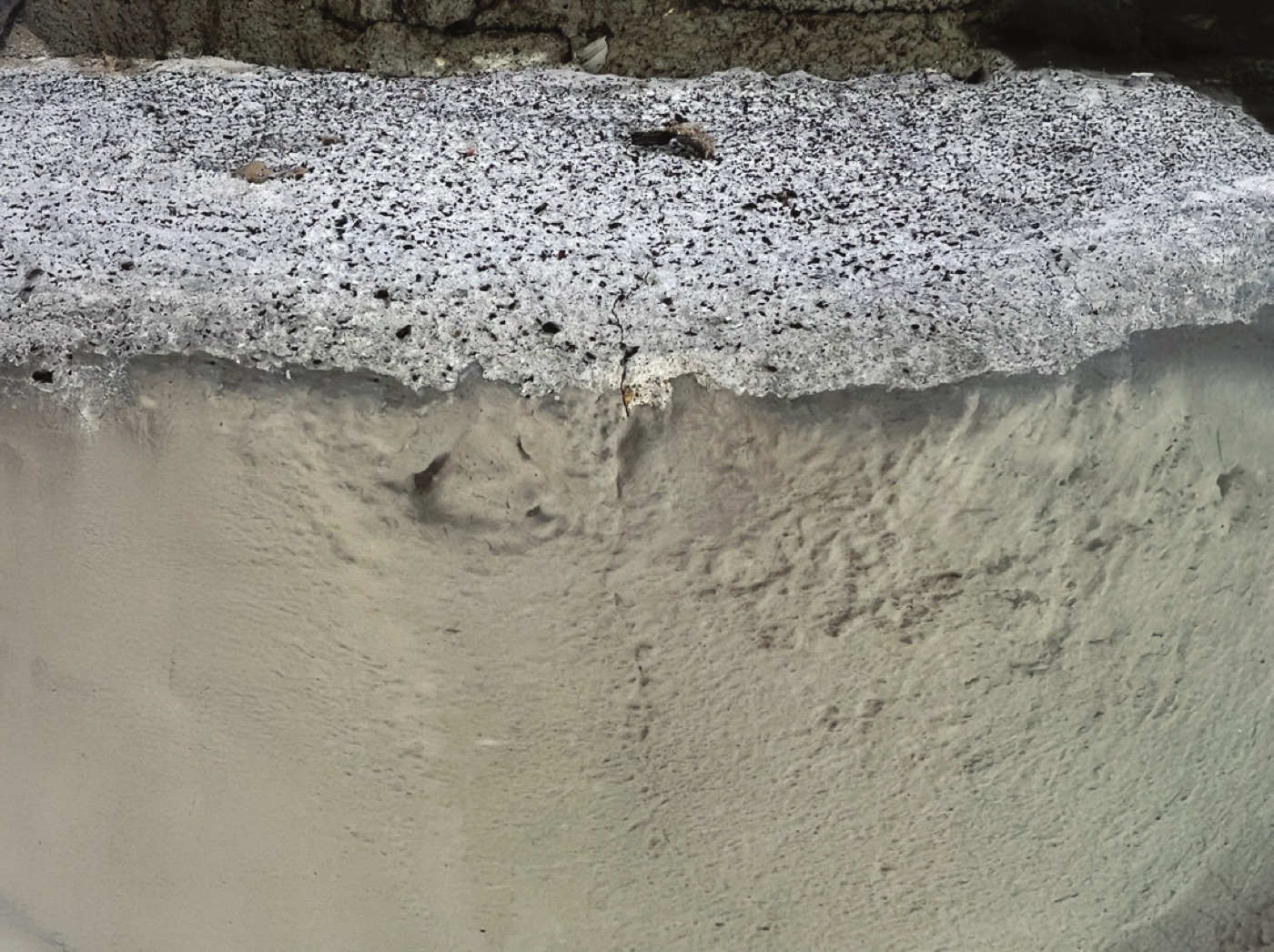
Every one of the mechanisms below ends the same way in untreated concrete: the cement binder degrades first, and only then does the embedded steel corrode. That order is worth holding on to, because it is why protecting and rebuilding the binder is the whole job.
Carbonation is the mechanism that quietly ends most reinforced concrete. Carbon dioxide diffuses in, reacts with the calcium hydroxide left over from cement hydration, decalcifies the binder and drops the pore pH until the passive film protecting the reinforcement dissolves. The ceramic system attacks that at the source by converting calcium hydroxide, the weakest phase in the paste, into durable calcium aluminosilicate hydrate. There is no longer a reservoir of weak phase for carbon dioxide to consume. On that mechanism, CeramycGuard is immune to carbonation.
UV degrades organic coatings by breaking carbon based bonds, which is why epoxies chalk and urethanes fade. CeramycGuard has no carbon backbone to break. It is inorganic, and its silicon-oxygen and aluminum-oxygen bonds are untouched by the wavelengths that destroy organic chemistry. It is not UV protected, it is immune to UV, which is a different and more durable claim. Sunlight continues to densify the ceramic rather than degrade it, and the surface is oxidative and photocatalytic, so exposed work tends to stay cleaner and needs washing less often.
Against chlorides the defense is layered, and it is deliberately described here as a mechanism rather than a number. CeramycGuard closes the surface pore network, so liquid water and everything dissolved in it cannot be driven in through the capillaries that salt normally travels down. Underneath, aluminate sites in the rebuilt binder actively bind incoming chloride into Friedel's salt and hold it away from the reinforcement, for as long as the pore alkalinity that keeps that mineral stable is maintained. The alkaline reserve therefore matters as much as the seal does, which is why chloride work is specified as Ceramic System PoreBlocker™ followed by CeramycGuard: the binding capacity is built by the colloidal treatment that penetrates, and the surface treatment keeps the ingress out.
The surface is non-porous to liquid water and still permeable to water vapor, which sounds contradictory and is not. Liquid water needs pores wide enough to overcome its own surface tension. Individual vapor molecules are orders of magnitude smaller and diffuse through the nanoscale network without capillary action. So the concrete can release the moisture already inside it while nothing gets in as liquid. That is exactly why a treated slab does not blister the way an impermeable organic system does when vapor drive builds underneath it, and why trapped moisture does not become a corrosion cell against the rebar.
A coating that expands and contracts at a different rate from its substrate tears itself off over enough cycles. CeramycGuard is thermally compatible with the concrete surface, and it is chemically bonded into it rather than stuck onto it, so seasonal movement is shared instead of fought. Thermal cycling testing recorded no checking, no cracking and no blistering. In freeze-thaw country the sealed surface is doing a second job as well: freeze damage needs water inside the pore structure to expand, and a closed surface is how that water is kept out.
On acids the honest envelope matters more than a slogan. The chemistry holds up against biogenic sulfuric acid in wastewater service, the organic acids found in food and beverage processing, dilute mineral acids and atmospheric acid deposition. Concentrated mineral acids, hydrofluoric acid and continuous immersion in aggressive chemistry sit outside that envelope and need application-specific testing first. On wear, the composite is harder and denser than the concrete it is formed on, and it stays slip-resistant when wet.
With CeramycGuard, cracks up to roughly 5 mm are chemically re-bonded. The material migrates into the crack, reacts with the exposed faces, and re-polymerizes across them rather than filling them with a foreign material that will shrink or debond later. The same behavior repairs surface corrosion damage and spalled areas, replacing binder the corrosion process took out and returning the surface to a sound condition.
The limit is real and it is stated plainly. Wider cracks, and any actively moving or structural crack, still need structural repair first, with the ceramic system applied afterwards as the protective layer. That order does not change, and no chemistry changes it.
Repairs and recoats years later are simple for the same reason the original bond is strong. A cured CeramycGuard surface is not chemically inert. It retains reactive sites, so a fresh application bonds into the old one and the result is a single continuous network rather than two stacked layers. Spot repairs are self-bonding and disappear into the surface. A full restoration recoat needs cleaning to remove contamination, not abrasive blasting, not stripping, and not the removal of everything that went before, which is the usual cost of recoating a failed organic system.
Recommended uses
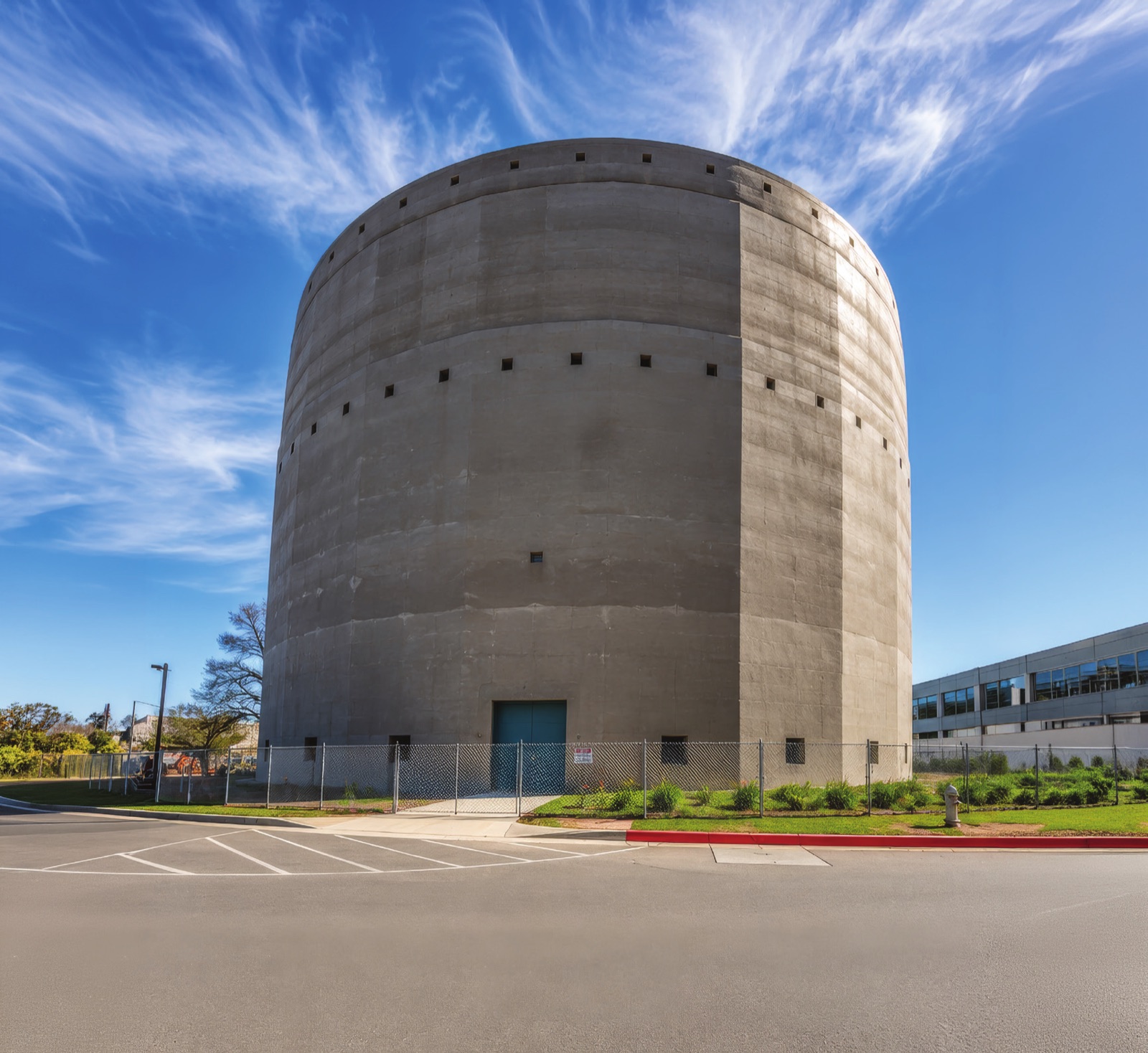
Reservoirs, tanks and treatment structures exposed to constant moisture and chemical attack.
Bridges, decks and structures fighting carbonation, de-icing salts and freeze-thaw.
Concrete in chloride-rich environments where salt drives reinforcement corrosion.
Acid, abrasion and biofilm resistance for demanding production environments.
Coverage is 150 to 200 sq ft per gallon at 7 to 9 mils, and it moves around more than a coating estimator expects. That is not vagueness, it is the product behaving differently from a film, and it is worth understanding before anyone prices a job.
One gallon covers the same total area whether that area is at the surface or below it. The material wants to bond to the calcium, silica and other elements in the cement paste, the sand and the aggregate, so on damaged concrete it goes down into the corrosion-induced porosity instead of stopping at the face. On new or undamaged concrete a gallon reaches about 225 sq ft. On weathered concrete, about 175. On degraded, porous concrete, about 125, because far more of the material is doing work below the surface.
Read a low coverage figure as information, not as an overrun: it is telling you how much restoration the substrate needed. Existing concrete should be primed with Ceramic System PoreBlocker™ first for maximum performance, which refines the pore network before the surface is sealed.
Practical facts
The full engineering data, the application envelope and the cure schedule are on the technical detail page. The CSI specification is ready to drop into a project manual.
Product documents
Application and specification
Request the technical data sheet or talk to our team about application on your concrete asset.