Easy to clean
The cured surface is dense and chemically resistant, so dirt, grime, vehicle residue and food soils sit on top of it rather than working into it. Regular auto scrubbing with a green cleaner is all it asks for.

Prepare the concrete (Base Layers)
Seal & bond (Surface Barrier)
Protect & finish (Topcoats & Sealers)
Complete systems (Multi-Layer)
Technical detail (Long Form)
Protect & finish
A floor finish built on polyester hybrid chemistry with organic and inorganic ceramic technologies, delivering exceptional chemical, abrasion and solvent resistance. Pair it with CeramycGuard™ and CrossLinker™ to create a composite flooring system that bonds with the concrete itself, backed by a 15-year warranty when the full stack is installed to our specification.
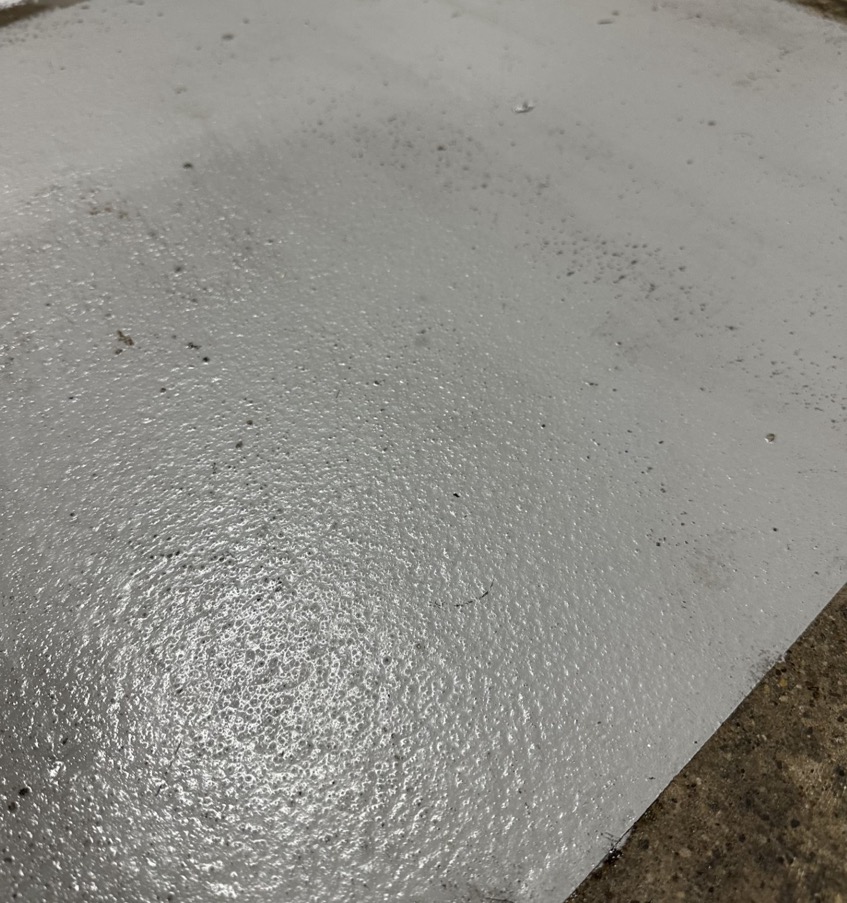
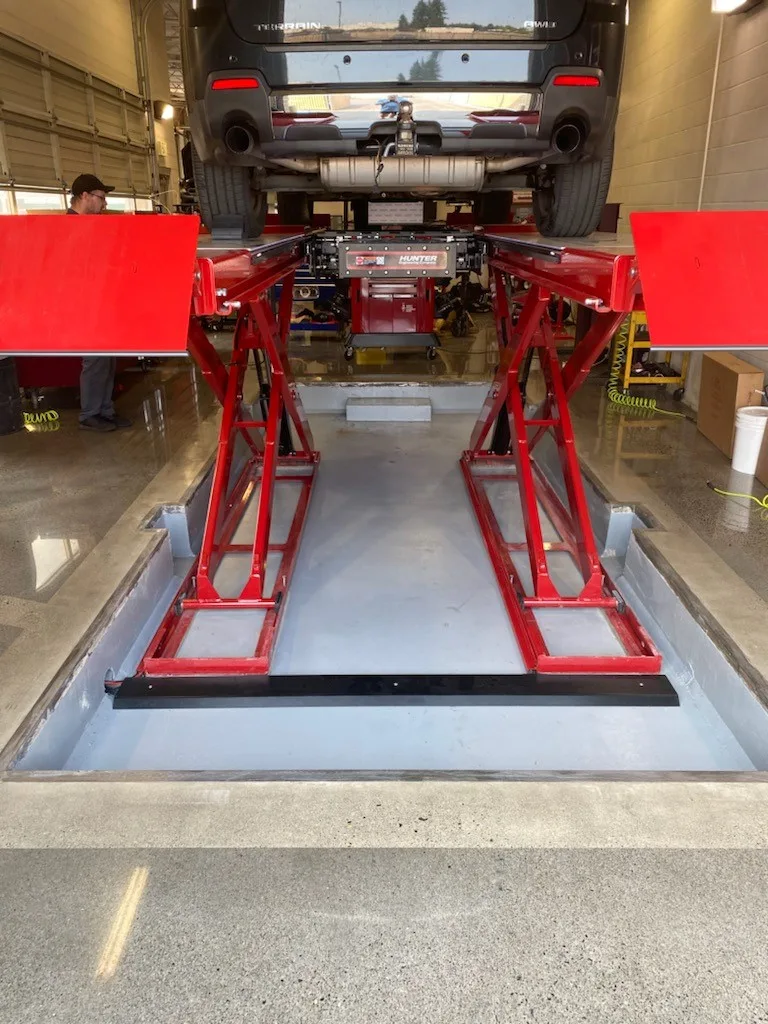
Fortress XD™ Floor Finish is the finish for environments that demand chemical and abrasion resistance. Its polyester hybrid formula provides exceptional wear protection from abrasion, chemicals and solvents, and its biologically impervious surface resists microorganism growth on treated surfaces.
It is a two-layer composite system rather than a coat of paint. What goes down is a tough, non-slip finish that protects the concrete underneath from corrosion, salt, carbonation, weathering and abrasion, reinforced with alumina and silica carbide to carry the wear and chemical load. It is made to be the topcoat of Zirconia's Ceramic Surface Treatment system, and it is specified as part of that system rather than on its own.
It is available in satin or high gloss, clear or tinted, so it meets appearance requirements as well as performance ones.
Read the Fortress XD installation and technical data The data sheet figures, the installation instructions, and the food processing project behind them.
The composite system
The inorganic alumina-zirconia-silicate ceramic treatment chemically bonds with the concrete substrate, sealing its pore network and forming a non-porous base. It cross-links directly with the concrete, giving the system a foundation that cannot delaminate.
Applied over the CeramycGuard™ base, CrossLinker™ creates a chemically bonded connection between the inorganic base coat and the finish coat above. It is the bridge that makes the composite system possible.
As it cures, the polyester hybrid finish coat cross-links into the CrossLinker™ primer layer, tying the hybrid topcoat to the inorganic base. The result takes the best of both coating types: chemical and abrasion resistance above, permanent adhesion below.
The result is a composite flooring system with an inorganic base that chemically reacts with the concrete, and an organic finish that delivers the surface performance industrial floors demand.
The reason Fortress XD is specified over CeramycGuard™ rather than over bare slab is that CeramycGuard™ does restorative work first. It replaces cement paste the concrete has lost, it binds the loose elements at the surface back into a continuous mineral skin, and with CeramycGuard™ the system chemically re-bonds cracks up to roughly 5 mm. Wider cracks, and any crack that is still moving or structural, need structural repair before a coating goes anywhere near them.
That matters because it changes what the finish is standing on. A conventional floor coating is applied to a profiled surface and held there by mechanical adhesion, so it inherits whatever the top few millimeters of that slab happen to be, weak paste included. Fortress XD is applied to a surface that has been rebuilt and sealed, and it bonds into it chemically. The finish and the concrete stop being two things stacked on each other and start behaving as one composite.
Next generation technology
Most floor finishes make you choose. A hard, mineral-rich coating resists abrasion but is difficult to clean and brittle under impact. A dense organic film cleans beautifully and shrugs off chemicals but wears through where the traffic turns. Fortress XD combines the best traits of both, and the combination is the product.
Ultra-hard ceramics increase resistance to wear and abrasion. Dense organic polymers improve cleanability and chemical resistance. The inorganic and organic crosslinking between them optimizes density, which is what makes the cured film dense rather than merely thick. Working together, those same elements reinforce a durable non-slip surface, so safety is not a separate layer added at the end but a property of the film itself.
The constituent resins are confidential and we do not publish them. What we do publish is the description Benjamin Cook, who formulates the chemistry, uses himself: polyester hybrid chemistry with organic and inorganic ceramic technologies. It is not a urethane, and any older document describing it as one is out of date.
Integral non-slip
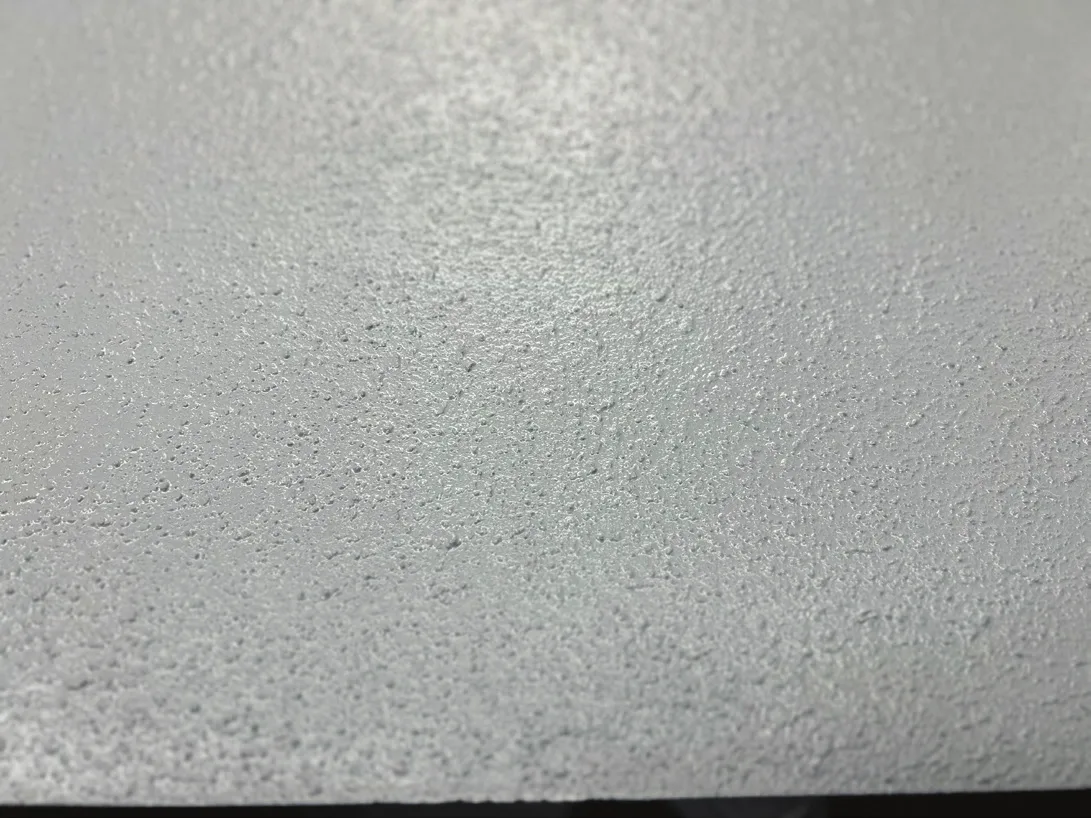
On most floors, slip resistance is aggregate broadcast into a wet coat and then locked under a seal coat. It works until the seal coat wears through, at which point the grit comes away and the floor becomes slippery in exactly the places people walk most. That is a maintenance problem that presents as a safety problem.
Fortress XD carries its non-slip elements integrally. They are part of the coating and are added only to the actual surface layer, so they are held in the film rather than resting on it, and they have extreme resistance to wear. Because they are engineered in rather than thrown on, the profile can be specified to the job: tall and spiky where an industrial floor needs to grip through oil and water, lower and rounded where the surface is walked on barefoot, such as a pool deck or a shower area. That choice is made with a Zirconia representative rather than picked off a shelf, because the right answer depends on what is on the floor, what crosses it, and who walks it.
The practical result is a floor that keeps its slip resistance as it ages, and a surface that can still be cleaned. An aggressive broadcast finish traps soil; an engineered integral profile is specified to give the grip the environment needs while remaining scrubbable, which is why the same product suits both a de-icing deck and a food plant.
What the surface does
The cured surface is dense and chemically resistant, so dirt, grime, vehicle residue and food soils sit on top of it rather than working into it. Regular auto scrubbing with a green cleaner is all it asks for.
It forms a chemically bonded composite with the CeramycGuard™ and concrete layer beneath, which cannot delaminate, chalk or peel. The finish cannot tear or debond from the concrete surface, and that is what extends the working life of the floor.
The non-slip elements are bonded into the coating rather than scattered onto it, so they have extreme resistance to wear and stay where they were placed for the life of the surface.
It resists hot-tire turning and the tire-related friction of heavier vehicles, which is the load that lifts a conventional coating off a parking deck. That includes the added weight of electric cars and trucks.
It withstands a wide range of chemical exposures, including automotive wastes, and it does not degrade easily under them. Regular maintenance extends that further.
The finish is pigmented, UV stable and non-yellowing, so an outdoor deck does not turn amber the way an exposed epoxy does and an outdoor installation is not compromised by sunlight.
Because the bond is chemical, each section of concrete behaves independently of the others. Wear stays local, so a high-wear bay can be addressed on its own without tearing out and reinstalling the whole floor.
Fortress XD is non-breathable by design: it is a durable barrier to contaminants trying to enter the concrete, sealing the surface against corrosive chemicals and protecting the asset underneath.
A low VOC coating with high solids, above 90 percent, which keeps emissions down both for the environment and for the crew applying it.
Warranty
As part of the Ceramic Surface Treatment coating system, Fortress XD carries a 15-year non-disbondment and non-corrosion warranty. The condition attached to it is not fine print, and we state it every time the term appears: the warranty applies when the product is installed according to our specification and as the full product stack, Colloidal, then CeramycGuard™, then Fortress XD™.
The reason is the same reason the product works. The warranty is written against the performance of a bonded composite, so it covers the system that was installed as specified, not a finish coat treated as a standalone product on someone else's primer. A specification that drops a layer, or an installation that runs outside the stated conditions, is a different assembly and is not what the term was written for.

Recommended uses
Fortress XD protects and preserves indoor and outdoor concrete in commercial, industrial, residential and institutional buildings. The common thread across every sector below is a floor that is cleaned hard, driven on, or both.
High-traffic production environments requiring protection from abrasion, chemicals and constant cleaning cycles. Manufacturing, production areas, distribution and maintenance floors all sit in this group.
Its biologically impervious surface resists microorganism growth, meeting the hygiene demands of food processing areas. Main plant floors, meat cutting rooms and cold storage are the named uses.
Resists fuel, oil, solvents and mechanical wear common in garage and workshop environments, including the hot-tire loading that failing coatings show first.
Durable, cleanable surfaces in warehouses, pharmaceutical plants and institutional settings, along with parking garages, loading docks, office space and catering kitchens.
Parking decks, pool decks, equipment rooms, trash and dumpster rooms, and under-paver applications, where a wet surface, a walked-on surface and a driven-on surface all sit in one building.
Hangars, de-icing decks, and storage and maintenance facilities, where de-icing chemistry and heavy point loads act on the same slab through the winter.
Malls, schools, fire stations and bus stations: floors that are cleaned hard on a schedule and cannot be closed for a week while a coating is replaced.
Grain silos, new dairy and livestock buildings, fuel storage silos and bio-based energy decks, all environments where organic acids and washdown attack the slab.
Transfer stations, organic recycling and renewable recycling facilities, where the loading is chemical, biological and mechanical at the same time.
Installation and technical data for Fortress XD™ Substrate requirements, mixing, application conditions, cure schedule, cured properties, and the food processing project that put the chemistry under acid, sugar and daily washdown.
Download product documentation
Design teams writing Fortress XD™ into a project manual can use the CSI specification.
Request the technical data sheet or speak with our team about the right composite floor system for your facility.