Technology

BioSecurity

Biosecurity means preventing microorganisms from reaching animals and humans through surfaces, food, water, air, and soil. Zirconia brings this protection to infrastructure with ceramic surface technologies engineered to resist microbial survival.

Structural biosecurity

Structural biosecurity refers to the building, engineering, and design controls that prevent the spread of microorganisms through the built environment. It covers viruses, bacteria, fungi, and more, all of which can be transmitted through surfaces before ever reaching food, water, animals, or humans.

Every common building material, whether concrete, steel, stainless steel, wood, or PVC, gives microbes the three things they need to survive: habitat, moisture, and nutrients. These materials are either grossly porous, meaning they have large visible pores like wood and concrete, or microporous, meaning their pores are too small to see like stainless steel and PVC. Either way, the surface traps food and moisture in ready-made microbial habitat.

Zirconia's ceramic surface treatment removes all three of those survival conditions by eliminating the habitat itself.

The science of microbe survival

Eliminate the habitat. Eliminate the microbe.

Like humans and animals, microorganisms need those same three conditions to survive and grow, plus specific ranges of pH, temperature, and oxygen. Remove any one of the three, and microbial survival and growth stop.

In building materials, food and moisture reach microbes through the habitat in the material itself. The gross porosity of concrete and wood, and the microporosity of stainless steel and PVC, each supply all three conditions at once. Treating the surface to durably eliminate that porosity removes habitat, moisture, and the nutrient supply in a single step.

Why existing materials fall short

Until now, the best available materials for microbe-sensitive environments have been stainless steel and PVC. Both were chosen because they are harder to clean than concrete or wood, and both meet governmental standards for non-porosity in food manufacturing. The problem is that "non-porous" by government definition is not the same as truly non-porous at the microbial scale. Both stainless steel and PVC contain micro-pores large enough for bacteria and fungi to colonize.

For concrete specifically, epoxy and urethane coatings exist to reduce degradation. But they can only form a physical bond with the textured concrete surface. They fail by peeling, cracking, and allowing moisture to seep in from beneath. Once that happens, the space between the coating and the concrete becomes a protected microbial habitat that cleaning protocols cannot reach.

The inevitable result of all these design limitations is a reliance on harsh chemical disinfectants and expensive, time-intensive cleaning regimens to keep microbial contamination under control. Zirconia eliminates the need at the source.

The Zirconia standard

Biologically Impervious™

Biologically Impervious™ is Zirconia's term for surface systems engineered to prevent microbial survival on and within infrastructure. Contamination that lands on these surfaces cannot break down the building material or cross-contaminate food, water, animals, or humans.

All Zirconia systems reach this standard through three properties working together. No single property is enough on its own. Combined, they remove the three conditions microbes need to survive: habitat, moisture, and nutrients.

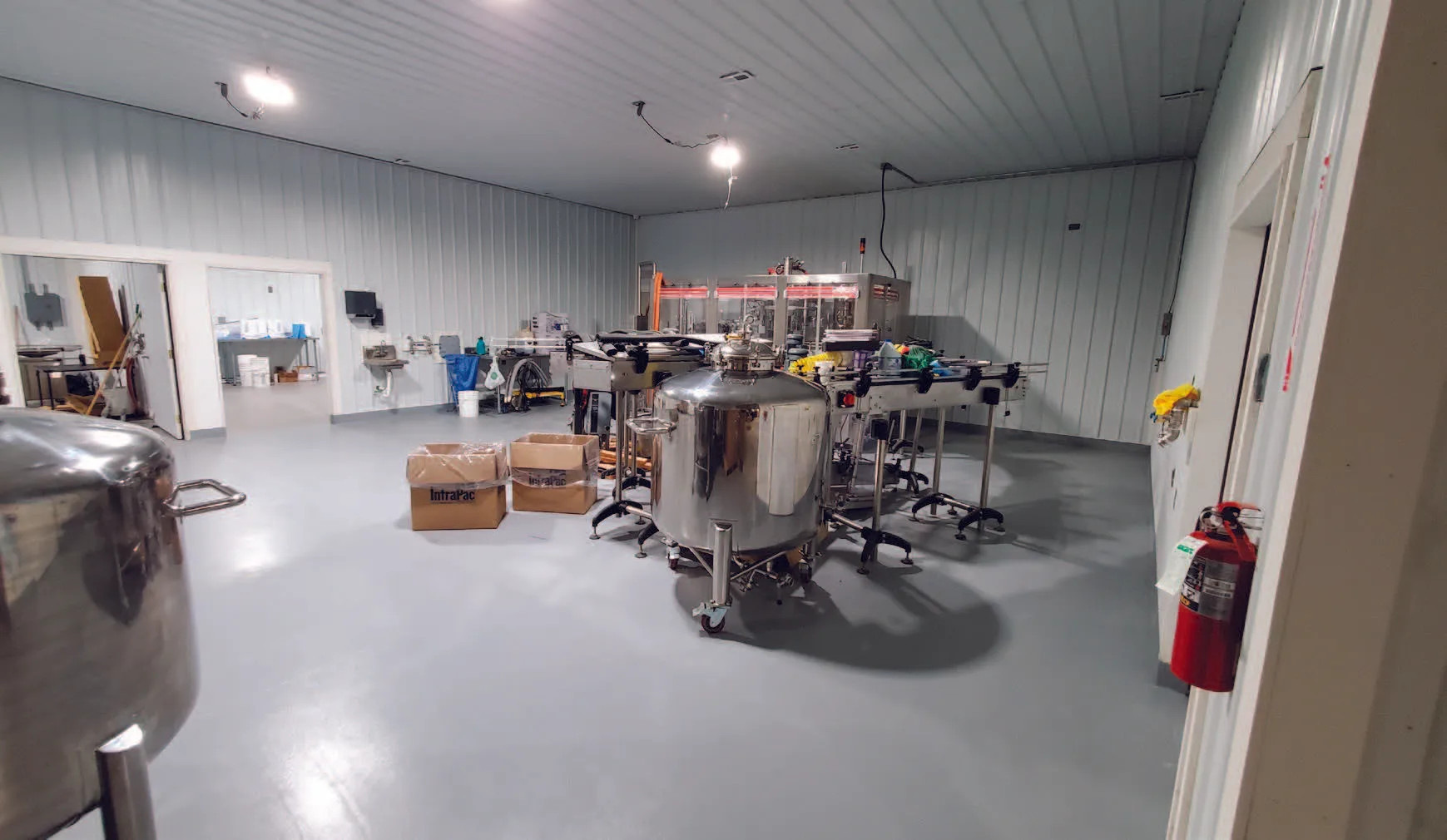
Coated concrete floor in a food and beverage facility
Treated commercial kitchen floor. Non-porous ceramic surface, cleanable with water.

Three defining properties

What makes a surface Biologically Impervious™

Non-porous down to the nanometer

Zirconia's ceramic surface technologies chemically bond with the substrate and fill every pore, large and microscopic, down to a single nanometer. The smallest microbe cannot penetrate, and the moisture and nutrients microbes need are blocked at the surface.

Easy to clean with just water

With virtually no pores remaining, contamination stays on the surface instead of working into cracks, fissures, or the pore network. Cleaning takes less time and less material, and in most industrial settings it removes the need for harsh chemical protocols.

Active antimicrobial protection

Every Zirconia coating system uses one or more antimicrobial mechanisms that continuously inhibit microbial growth. The action is passive and ongoing, so it does not depend on repeated chemical application.

Active antimicrobial protection

Three mechanisms, continuously working

Every Zirconia coating system uses at least one antimicrobial mechanism, and often several. They act continuously, not as a one-time treatment.

Bi-metallic ceramic surface (acts like antimicrobial metals)

The ceramic surface behaves like the antimicrobial metals copper, silver, and platinum: its safe alumina-zirconia-silicate polymers naturally oxidize and destabilize microbial cell membranes. This layer also stops biofilm from forming on the surface.

Photocatalytic oxidation

Under UV light, the photocatalytic surface increases oxidation that breaks down microbes. The surface itself does not degrade under prolonged UV exposure, so the antimicrobial action stays stable over the long term.

Integral antimicrobial additives

Antimicrobial additives are mixed into the coatings in liquid form and survive the curing process, giving continuous disinfectant action throughout the life of the coating.

Common questions

What does Biologically Impervious™ mean in practice?

Biologically Impervious™ means the surface is engineered so that microbes cannot survive on or within it. It is not a claim about killing microbes after they land. Instead, it removes the three conditions microbes need to establish themselves: habitat, moisture, and nutrients. Combined with the active antimicrobial layer, the surface stays hostile to microbial growth without constant chemical intervention.

Why do stainless steel and PVC fall short for food biosecurity?

Both materials meet governmental standards for non-porosity, but those standards were set before the scale of microbial contamination was fully understood. Both stainless steel and PVC have micro-pores that are large enough for bacteria and fungi to colonize and shelter in. Zirconia's ceramic bond fills pores down to the single nanometer, which is smaller than any known microorganism. That is the meaningful threshold.

Which products deliver the Biologically Impervious™ standard?

CeramycGuard™ is the foundation ceramic surface treatment for concrete, forming a chemically bonded geopolymer composite that eliminates surface porosity. For floor finishes in food processing and commercial kitchen environments, Fortress XD™ combines ceramic surface technology with urethane sealants to create an ultra-smooth, cleanable surface. Other Zirconia systems can be specified for particular biosecurity requirements. Contact our technical team for a project-specific recommendation.

Biosecurity starts at the surface.

Talk to Zirconia's technical team about specifying a Biologically Impervious surface system for your food processing facility, commercial kitchen, healthcare space, or any other biosecurity-sensitive environment.