Fire-exposed structures
Protects concrete surfaces in wildfire-prone regions and fire-risk buildings against flame and radiant heat.

Prepare the concrete (Base Layers)
Seal & bond (Surface Barrier)
Protect & finish (Topcoats & Sealers)
Complete systems (Multi-Layer)
Technical detail (Long Form)
Protect & finish
A high-temperature inorganic sealant that fuses with CeramycGuard™ to form a glass-phase layer (a hard, glass-like ceramic skin), protecting concrete against fire and extreme radiant heat.

Concrete under fire, intense sun or high-temperature industrial conditions faces thermal loads that standard coatings cannot survive. CG HeatShield™ is a high-temperature penetrating inorganic sealant formulated to handle exactly those conditions.
Applied over a cured CeramycGuard™ base, it fuses with the ceramic surface to form a durable, heat-tolerant glass-phase layer. It seals the concrete against corrosion at the pore level and shields that surface from fire, radiant heat and thermal shock. Independent testing by Surface Optics Corporation puts its Solar Reflectance Index (SRI) at 70, so the surface stays cooler in direct sun. Neither layer delaminates under thermal cycling.
Read the test report and the application instructions The independent laboratory result in full, and the conditions the coating is applied in.
Two-product system
CG HeatShield™ does not work alone. It is the second layer of a complete protection system. CeramycGuard™ is applied first, bonding chemically to the concrete and sealing the pore network. Once cured, CG HeatShield™ is applied over it, adding the high-temperature glass-phase heat and fire resistance that standard coatings cannot provide.
Chemically bonds to the concrete surface, forming an alumina-zirconia-silicate composite skin that seals the pore network and prevents corrosive agents from reaching the reinforcing steel beneath.
Applied over the cured CeramycGuard™ coat, it fuses with the ceramic surface to add a high-temperature glass-phase layer that resists fire, radiant heat and thermal shock without delaminating from the substrate.
Thermal performance is the reason CG HeatShield™ gets specified, but the surface still has to survive everything else a working asset throws at it. The layer is infrared reflective, so it disallows thermal gain in the concrete from radiant sources of heat, not only from direct sun. A furnace wall, a flare, a bank of process equipment: energy that would otherwise be absorbed by the slab, and turned into expansion and thermal movement, is turned back at the surface instead.
It is UV tolerant, and resists degradation from UV exposure. That matters more than it sounds. On an outdoor asset, ultraviolet light is usually what finishes an organic surface treatment first, long before heat or chemistry gets near it.
The finished layer is non-porous and non-breathable, so it disallows the ingress of corrosive chemicals and water vapor into the ceramic surface beneath it. The pore network that CeramycGuard™ seals stays sealed, and the reinforcing steel below stays out of contact with what would corrode it.
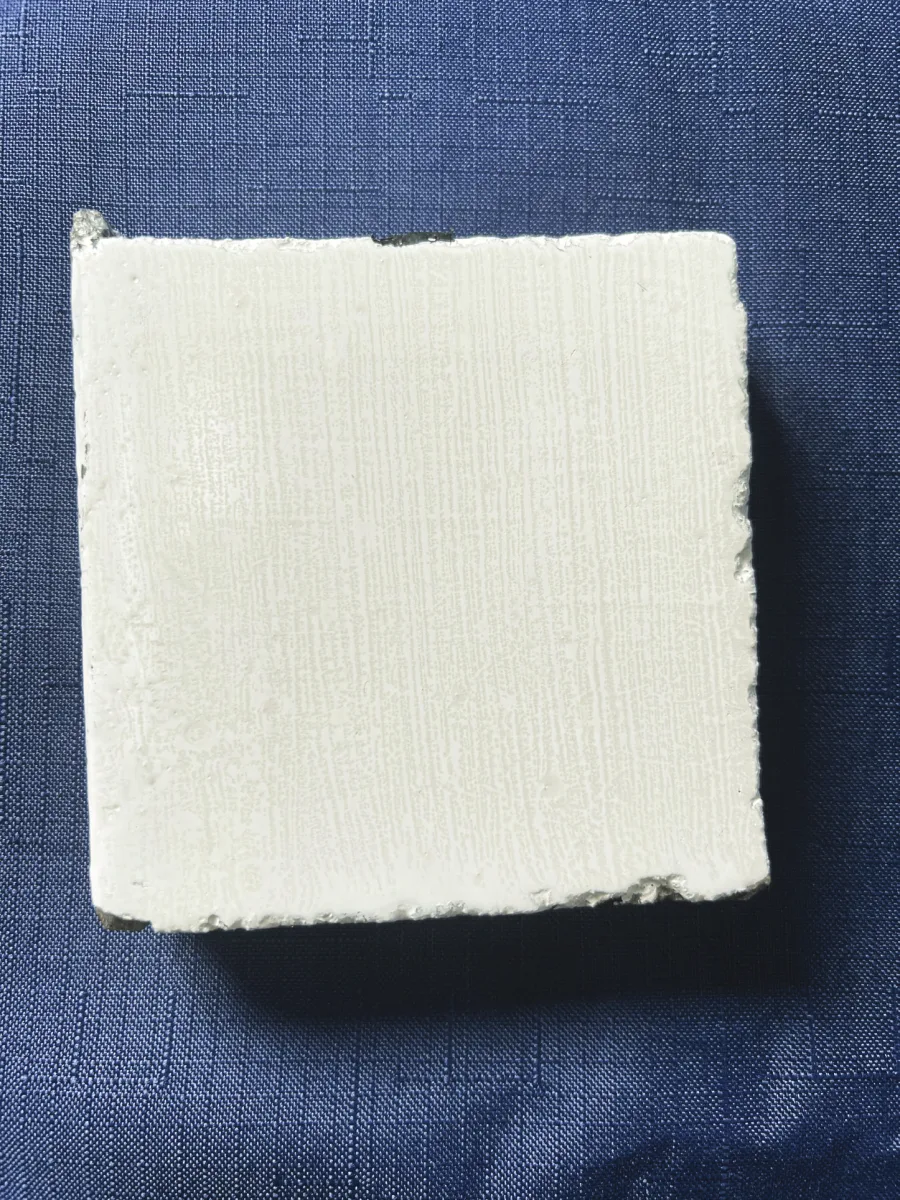
It carries chemically bonded non-slip grit, which reduces the slip and fall hazard on an industrial walking surface. The grit is part of the coating rather than a broadcast additive resting on top of it, so traction does not wear away separately from the finish.
And it rebonds to itself. A damaged area is sanded back and recoated rather than stripped out, with a 24 hour turnaround. On a live plant that is the difference between a repair on one bay and a shutdown, and it is worth carrying into the specification.
On chemistry, the envelope is the honest one that applies across Zirconia's ceramic surface treatments. They stand up to the acids infrastructure actually meets in service: biogenic sulfuric acid in wastewater, the organic acids of food and beverage processing, dilute mineral acids, and atmospheric acid deposition. Concentrated mineral acids, hydrofluoric acid and continuous immersion in aggressive chemistry are a different question, and those go to our technical team for application-specific testing.
Recommended uses
Protects concrete surfaces in wildfire-prone regions and fire-risk buildings against flame and radiant heat.
Guards concrete plinths, hearths and floors adjacent to high-temperature furnaces, kilns and process equipment.
A Solar Reflectance Index of 70 keeps treated surfaces from heating up in direct sun, reducing thermal load on the structure.
Shields concrete in zones exposed to process heat, flaring events and accidental thermal release.
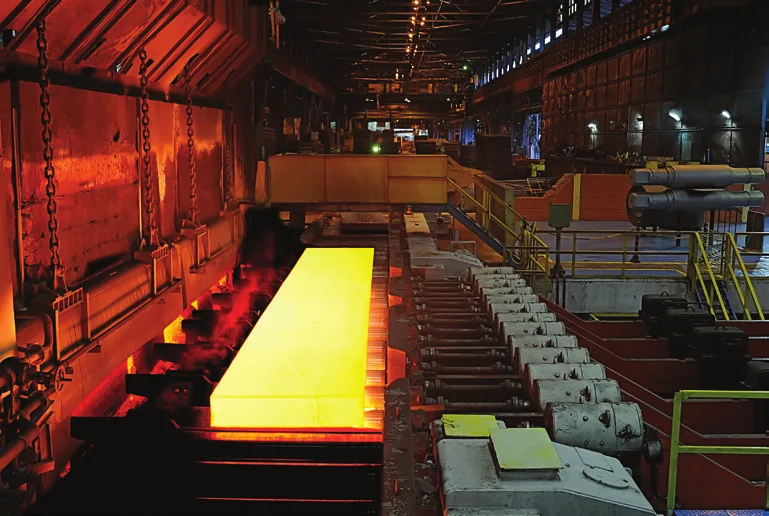
High-heat industrial environments of the kind CG HeatShield™ is offered for.


Common questions
No. CG HeatShield™ is designed as a top-coat applied over a cured CeramycGuard™ base. The two products work as a system: CeramycGuard™ provides the chemical bond to the concrete and seals the pore network, while CG HeatShield™ adds the high-temperature glass-phase heat and fire resistance layer on top.
The CeramycGuard™ and CG HeatShield™ system is engineered for fire exposure and extreme radiant heat. Independent testing by Surface Optics Corporation, to ASTM C1549, ASTM E408 and ASTM E1980, measured a solar reflectance of 0.578 and a thermal emissivity of 0.951, giving a Solar Reflectance Index (SRI) of 70. Contact our technical team for specific temperature ratings relevant to your application.
We hold no blast test data and publish no blast performance figure. What we can give you is design intent: the layer is built from microscopic ceramic shields that overlap each other, a structure intended to dissipate blast force rather than let it reach the concrete. We do not currently have a way to reproduce a high-energy shockwave, so that intent is unverified by test. Every performance figure we do publish for this product is thermal. Talk to our technical team if blast exposure is part of your application.
CG HeatShield™ is applied by brush or roller over a fully cured CeramycGuard™ coat. Surface preparation and cure intervals between coats are specified in the Technical Data Sheet. Application follows the same contractor process used for CeramycGuard™.
Request the technical data sheet or talk to our team about applying the CeramycGuard and CG HeatShield system to your concrete structure.