Porosity is a hygiene failure
Concrete's open pore network harbors bacteria, moisture and food residue. No matter how often you clean, an untreated surface can never meet clean-environment standards.

Prepare the concrete (Base Layers)
Seal & bond (Surface Barrier)
Protect & finish (Topcoats & Sealers)
Complete systems (Multi-Layer)
Technical detail (Long Form)
Technology
Porous concrete and peeling epoxy are incompatible with clean food manufacturing environments. Zirconia's inorganic Ceramic Surface Treatment chemically bonds to concrete, creating a sealed, biologically impervious surface that will not delaminate.
Food manufacturing places strict demands on surfaces. Concrete's porous nature means it is not an acceptable finish surface in clean environments. Contaminants, moisture and microbes colonize the open pore network, and routine cleaning cannot remove the risk while the pores stay open.
Coatings applied to address this problem often create a second problem. Organic coatings such as epoxies and urethanes cannot chemically react with or permanently bond to concrete, which is an inorganic surface. They grip the surface profile mechanically. Moisture in the form of water or vapor in the slab breaks that grip, causing delamination and peeling.
Zirconia has a solution. CeramycGuard™ is an inorganic Ceramic Surface Treatment (CST) that uses nano-alumina and zirconia silicates to renew and preserve concrete surfaces. This dense nano-ceramic geopolymer penetrates the surface, chemically bonds with the concrete matrix by reacting with the cement paste, and fills pores and micro-cracks, leaving a ceramic layer on top. CeramycGuard™ is not affected by wet-dry cycling or freeze-thaw cycles and will not peel, flake, chalk, or delaminate.
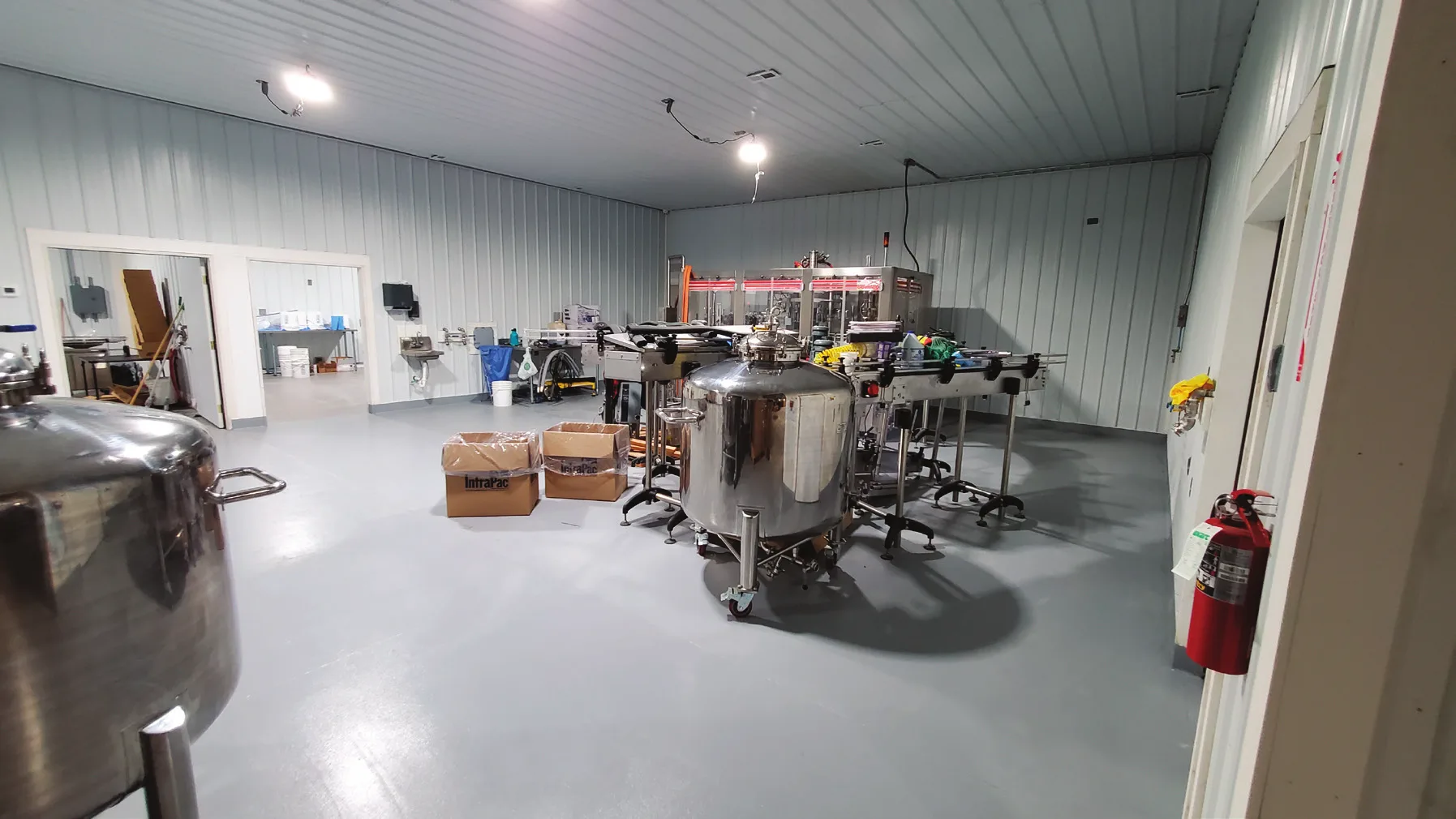
Why facilities need more than epoxy
Concrete's open pore network harbors bacteria, moisture and food residue. No matter how often you clean, an untreated surface can never meet clean-environment standards.
Epoxies and urethanes cannot chemically bond to concrete, an inorganic material. They rely on surface grip alone, so moisture or vapor in the slab causes delamination and peeling.
The porous, nutrient-retaining nature of untreated concrete provides an ideal habitat for microbial growth. Biofilm forms, accelerating corrosion and creating a persistent contamination risk.
Coatings that delaminate need constant patch repairs or full replacement, taking floor space out of service and adding significant cost over the facility's life.
CeramycGuard™ is the base coat for all Zirconia concrete solutions. Because it is inorganic, it reacts directly with the concrete matrix rather than simply sticking to it. The result is a chemically bonded geopolymer composite: a man-made stone surface that carries none of the failure modes of organic coatings.
For applications that require additional durability or a specific surface finish, Zirconia offers composite topcoat systems such as Fortress XD and BulletProof. These topcoats use ultradurable urethanes and quartz nanoceramics that bond chemically to the CeramycGuard™ base, forming an ultra-strong composite that combines the best of inorganic and organic performance, without the delamination risk.
Exclusive benefits
CeramycGuard™ penetrates the surface, chemically bonds with the concrete matrix by reacting with the cement paste, and fills pores and micro-cracks, leaving a ceramic layer on top.
Surface porosity is reduced dramatically, preventing water, salts, chemicals and other destructive elements from entering the concrete.
CeramycGuard™ incorporates advanced ceramics including Silica Carbide, creating a durable surface that resists abrasion from heavy loads and grinding traffic without peeling or tearing.
CeramycGuard™ forms a dense, inert surface that blocks microbially induced corrosion (MIC), the decay that occurs when microbes produce acids that eat into concrete. The surface offers no food source and no foothold, so microbes cannot take hold.
The non-porous, non-nutrient surface gives bacteria nowhere to settle or feed, so floors stay easy to clean and meet the hygiene demands of food manufacturing.
CeramycGuard™ bonds into itself, so a spot repair fuses with the existing coating and can be redone again and again. Floors are fixed in place without full repainting, keeping long-term maintenance costs low.
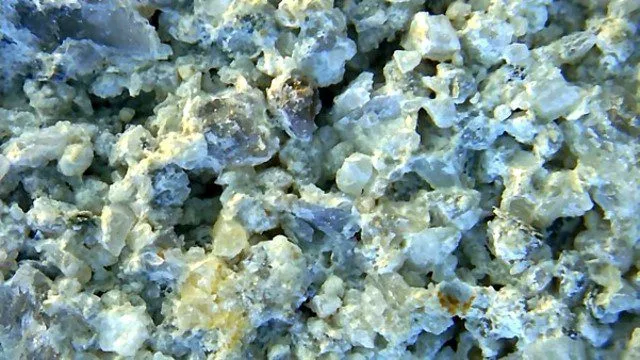
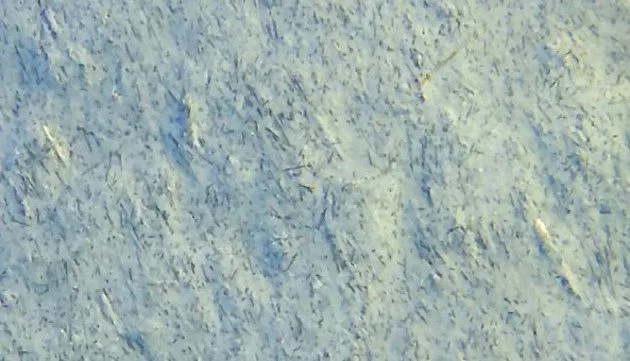
Under the microscope (50x)
Recommended systems
The inorganic ceramic base coat. It chemically bonds with concrete, sealing the pore network and forming a granite-like, non-porous composite layer that will not delaminate.
A composite topcoat that bonds chemically to CeramycGuard™, combining inorganic ceramic adhesion with ultradurable urethane and quartz nanoceramic performance.
An extreme-duty composite topcoat for the most demanding industrial floor environments, combining the ceramic base with maximum chemical and abrasion resistance.
Download product documentation
Request technical documentation or talk to our team about the right ceramic surface treatment for your production environment.