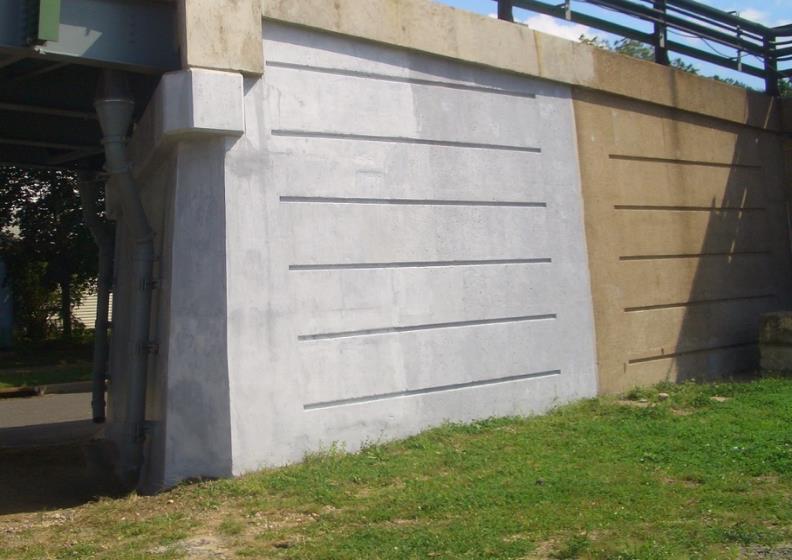
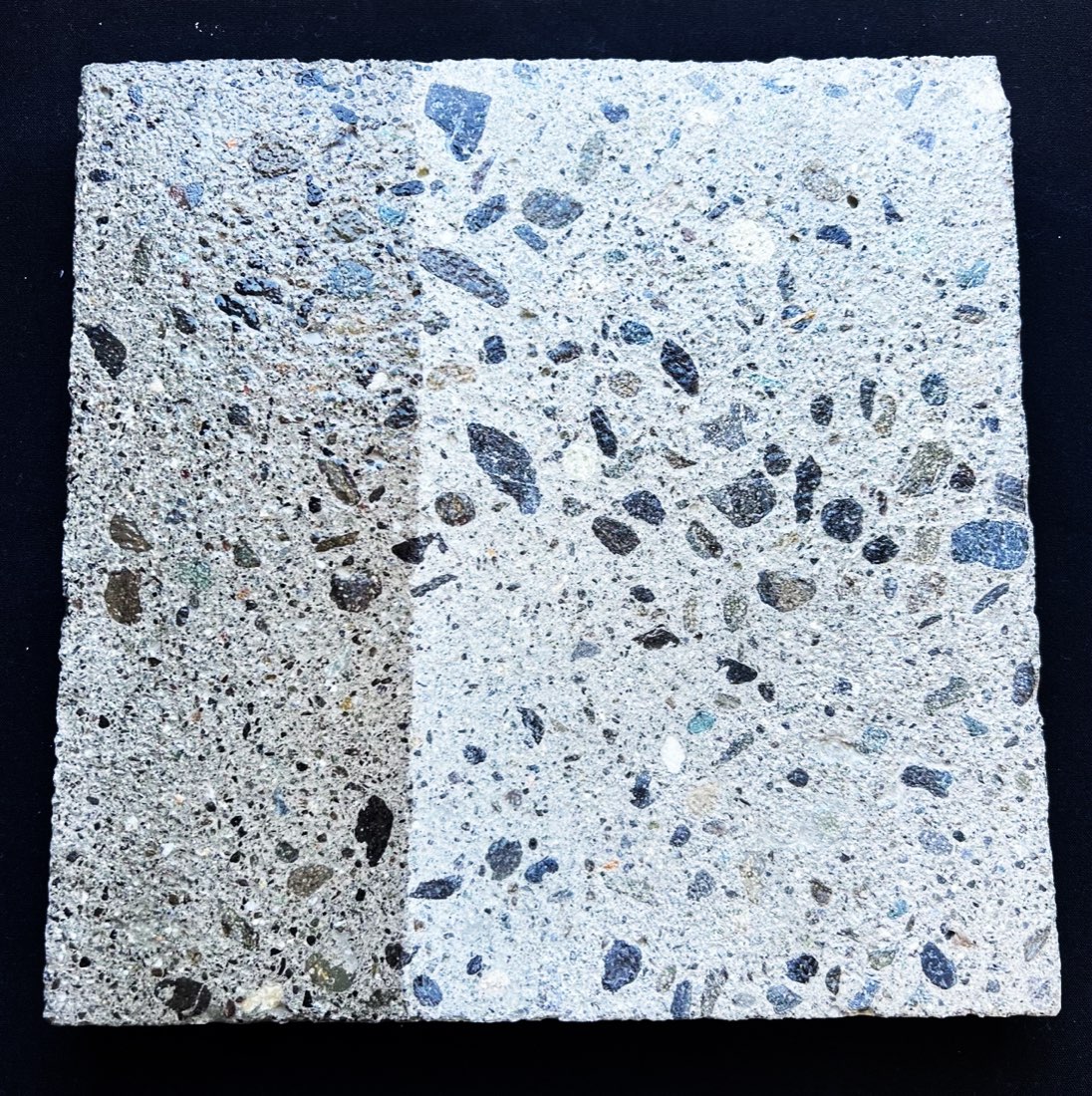
The Bridge Deck Longevity System. A two-stage penetrating treatment that extends the life of reinforced concrete bridge decks by decades, installed in a single overnight closure.
Treat the deck you have instead of replacing it.
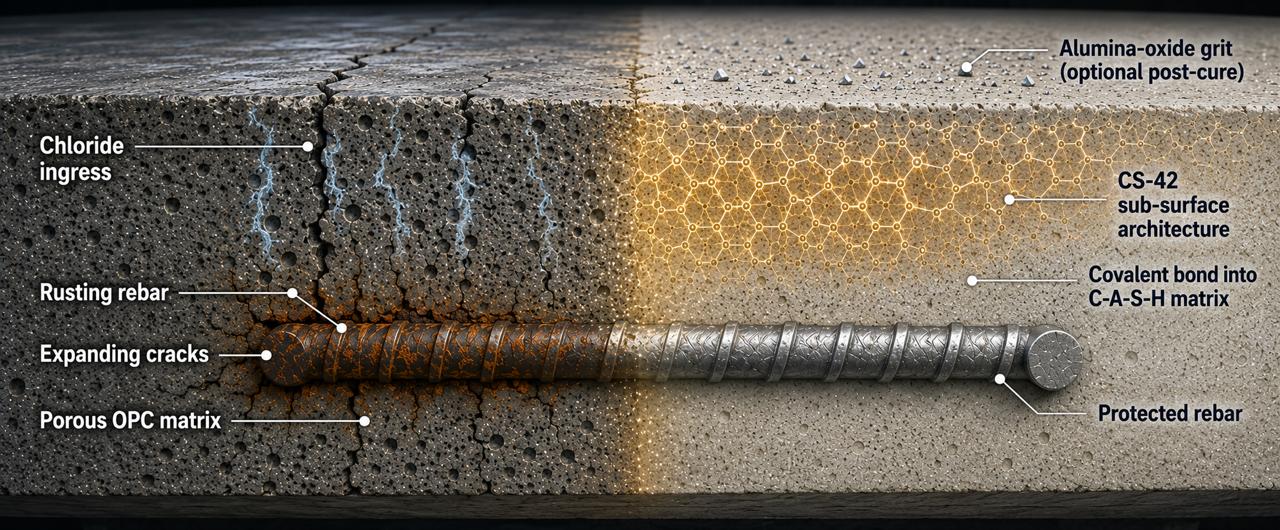
A bridge deck does not fail because the concrete runs out. It fails because salt and
carbonation reach the reinforcing steel inside it. ConcreteCare CS-42™ is a chemically
bonded corrosion barrier that goes after both, sealing the deck against chloride ingress
while preserving the alkalinity that keeps the embedded steel passivated.
It is a two-stage penetrating treatment, not a coating or an overlay. Stage 1 soaks deep
into the deck and rebuilds it from the inside. Stage 2 seals the surface without forming
a film, so skid resistance is preserved and there is nothing to delaminate. The result is
a deck protected for decades beyond its typical replacement cycle, and an aged deck that
has already begun to deteriorate can be restored in place.
CS-42 is the infrastructure product. Its stablemate for driveways, walkways, patios and
pool decks is the ConcreteCare Ceramic Shield System™, built
around the CS-01 sealer. The two share a name and a chemistry family, not a specification.
For the chloride and carbonation mechanism in full, see
how to stop salt corrosion.
CS-42 at a glance
Two-stage penetrating treatment, no surface film
Preserves skid resistance, nothing to delaminate
Chloride diffusion reduction over 50% (ASTM C1556)
Holds pore pH in the steel-passivating 11.5 to 12.5 range
Fills micro-cracks and rebuilds the deck from within
Halts carbonation at the treated surface
Water-based, no odor, no flash point
Coverage about 175 sq ft per gallon per stage
Installed in a single overnight closure
Deck reopens to traffic within 24 hours
How it works
Two stages, one overnight closure
01 · Stage 1
Penetrating treatment
Soaks deep into the deck, fills micro-cracks and rebuilds the concrete from the inside, restoring an aged deck in place rather than resurfacing it.
02 · Stage 2
Surface densifier
Penetrates and seals deeply into the surface without forming a film, so the deck keeps its skid resistance and there is no coating to peel, blister or wear off under traffic.
What it does for the deck
Protecting the steel, not just the surface
Keeps the steel passivated
Reinforcing steel is protected by the alkalinity of the concrete around it: above about pH 11.5 its passive film reforms faster than it dissolves. CS-42 holds the pore solution in that steel-passivating 11.5 to 12.5 range, and the restored binder actively buffers the alkalinity rather than simply sealing it in.
Cuts chloride ingress
Chloride diffusion is reduced by more than 50% when tested to ASTM C1556, so road salt and sea spray reach the rebar far more slowly.
Halts carbonation at the deck face
Carbonation drives the pH down and strips the steel of its protection. Sealing the surface shuts down the carbonation front where it starts, at the face of the deck.
Restores rather than replaces
An aged deck that has already begun to deteriorate can be treated in place, where the usual route has been to demolish and rebuild.
Nothing to delaminate
Because both stages penetrate instead of forming a film, there is no membrane or overlay to debond, blister or wear through under traffic.
Skid resistance preserved
Because the treatment penetrates rather than coats, the deck keeps its existing surface texture and its skid resistance. There is no film sitting on the driving surface.
Where it is used
Reinforced concrete in salt and carbonation exposure
Bridge decks
The primary use case. Both new decks being protected from day one and aged decks that have already begun to deteriorate.
Parking structures
Multi-story decks carrying de-icing salt in on vehicle tires through every winter.
Marine decks
Structures exposed to sea spray, tidal cycling and permanently high humidity.
Reinforced concrete in salt or carbonation exposure
Any reinforced surface facing carbonation, salts, sea spray or high humidity where the embedded steel is the asset at risk.
Installation
A single overnight closure
PreparationThe deck is cleaned free of oil, grease and loose material, then pre-wet to a saturated surface-dry (SSD) condition.
Stage 1Applied with a low to medium pressure sprayer and worked into the deck with a soft-bristle broom or squeegee, then allowed to cure.
Stage 2The surface densifier is applied by the same method.
ReopeningThe full system is typically installed in a single overnight closure, with the deck ready to reopen to traffic within 24 hours.
Traffic: the deck is typically ready to reopen within 24 hours of the system being installed.
Request the ConcreteCare CS-42™ one-sheet for complete application specifications and site conditions.
Technical data
ConcreteCare CS-42™ specification
Chemistry
Water-based two-stage penetrating treatment
Appearance
Clear to white liquid
Odor
None
Flash point
None
Coverage
About 175 sq ft per gallon per stage (16 m² per gallon)
Chloride diffusion reduction
Greater than 50% (ASTM C1556)
Packaging
5 gallon (18.9 liter) pails, sold as a matched two-stage system
Storage
Two years in original sealed containers, indoors, 35°F to 100°F (2°C to 38°C), out of direct sunlight, protected from freezing
Application limits
Do not apply below 35°F (2°C) or above 90°F (32°C), or if rain is forecast within 24 hours