
Products
Prepare the concrete (Base Layers)
Seal & bond (Surface Barrier)
Protect & finish (Topcoats & Sealers)
Complete systems (Multi-Layer)
Technical detail (Long Form)
Prepare the concrete (Base Layers)
Seal & bond (Surface Barrier)
Protect & finish (Topcoats & Sealers)
Complete systems (Multi-Layer)
Technical detail (Long Form)
Technical detail
The data sheet, set out in full: the reaction the treatment runs inside the concrete, the surface it leaves for the ceramic coatings, and the product data an applicator specifies from. The product overview, coverage and site application steps are on the product page.
Ceramic System PoreBlocker™ is a water-based penetrating treatment for concrete. It is not a coating and it leaves no film. Applied to a prepared surface, it flows into the accessible capillary network and into micro-cracks, and then it reacts. Everything the product does follows from that one fact: the work happens inside the concrete, in the binder itself, rather than on top of it.
Its stated job on the data sheet is to provide an optimal surface for the application of Zirconia's ceramic surface treatments. On existing concrete it will either purge or encapsulate the contaminants held in the substrate, and the treated concrete performs comparably to moisture cured concrete, with reduced permeability and a denser surface. The product overview, coverage and the application sequence are on the Ceramic System PoreBlocker™ product page. This page is the detail behind it.
When cement hydrates it produces calcium hydroxide, also called portlandite, as a by-product. Benjamin Cook, who formulates Zirconia's chemistry, puts it at 20 to 25 percent of the cement. It carries no structural load, it is soluble, and it is the phase that carbonation, acid and soft water all attack first. A meaningful share of the binder in an ordinary slab is therefore a compound waiting to be consumed.
PoreBlocker carries alumina-doped colloidal particles, on the order of 5 to 10 nanometers, with reactive aluminate and silicate sites on their surfaces. Inside the pore network they react with three things at once: the free portlandite, which they consume and convert into calcium aluminosilicate hydrate (C-A-S-H); the calcium-rich, high-pH pore solution, which supplies the chemistry for those particles to condense into a continuous network; and the existing calcium silicate hydrate, into which aluminum substitutes to upgrade it to the more durable C-A-S-H form. The reaction kinetics run roughly fifty times faster than standard cement hydration.
C-A-S-H is calcium silicate hydrate with aluminum substituted into key positions in the silicate chain. That single substitution does four things. Chains grow longer and crosslink, so a one-dimensional chain structure becomes a two and three-dimensional network. Calcium locks in more tightly, because the aluminate sites carry a permanent negative framework charge that coordinates calcium ions strongly, which raises resistance to leaching under acid and carbon dioxide attack. Carbonation slows, because of that tighter calcium binding and the denser framework. And the matrix gains an ability plain calcium silicate hydrate does not have: it binds incoming chloride.
This is why PoreBlocker is described as rebuilding the binder rather than densifying the surface. A silicate densifier hardens what is there. This chemistry regenerates the phase that aging removed, delivering fresh silicon and aluminum to re-form the bridging oxygen bonds that hold concrete together, re-coordinating calcium into tightly bound aluminate sites, and re-establishing interlayer hydration.
Chloride. The defense is layered rather than singular. The densified C-A-S-H matrix cuts diffusivity, so chloride moves through it more slowly. The aluminate sites actively bind incoming chloride as Friedel's salt, sequestering it away from the reinforcing steel, and those bound chlorides stay locked as long as pore pH remains above about 9, which is why the alkaline reserve this treatment preserves is what makes the binding durable. There is also an electrostatic effect: untreated concrete's free calcium hydroxide gives the paste a net positive zeta potential that attracts chloride ions, and converting that calcium hydroxide into the aluminosilicate network shifts the matrix negative, so chloride is repelled rather than drawn in.
Carbonation. Carbon dioxide diffuses into concrete, reacts with calcium hydroxide, decalcifies the binder, and drops pore pH from around 12.5 to below 9, at which point the passive film on the rebar dissolves and corrosion begins. PoreBlocker removes the fuel for that reaction. In Benjamin Cook's own words, the PoreBlocker and ActiveCure™ treatments eliminate the calcium hydroxide, making the concrete surface immune to carbonation, because there is no calcium hydroxide left to consume.
Steel passivation. Embedded steel is protected by a nanometer-thin iron oxide film that is stable in alkaline pore solution and dissolves below about pH 9. The treatment restores and buffers pore-solution pH into the 11.5 to 12.5 range where that film reforms faster than it dissolves. On already-corroding steel, restoring alkalinity puts the metal back into its passive domain, which is the chemistry behind the Sacramento reservoir restoration.
Freeze-thaw and wear. Densified capillaries hold less freezable water, and the crosslinked network distributes the tensile stress a freezing cycle generates. Abrasion removes the weakest phase first, which in ordinary concrete is the portlandite-rich paste, so converting that phase to harder C-A-S-H changes what the wear face is made of.
PoreBlocker and ActiveCure™ are the same chemistry family, confirmed by Benjamin Cook on 19 August 2026. What separates them is the stage of the asset's life, which drives concentration, particle size and carrier. ActiveCure™ is specified for fresh concrete: it joins the hydration reaction in the first days after placement and converts portlandite to C-A-S-H as it forms. PoreBlocker is specified for hardened concrete, including concrete that has been in service for years, where it penetrates the existing pore network and rebuilds the matrix that age, carbonation or chloride exposure degraded. On weathered, in-service concrete with a developed capillary system, penetration of 4 to 6 inches is documented. That qualifier is always attached, because a new pour has not developed the same capillarity.
In the application sequence, PoreBlocker is a base layer. It is applied first so that CeramycGuard™ bonds into a denser, contaminant-free, C-A-S-H rich surface rather than into aged paste.
Sodium and lithium silicate densifiers react with portlandite to form more calcium silicate hydrate. They contain no aluminum, so they rebuild with the weaker phase, they reach only a few millimeters, and they offer no chloride binding. Silanes and siloxanes line pore walls to make concrete water repellent, which is an organic chemistry that degrades under ultraviolet light over years and does nothing for the binder underneath. Crystalline waterproofers form deposits in pores and seal water, but they are calcium silicate hydrate based, so they do not upgrade the binder either. PoreBlocker's difference is the aluminum: it is what turns the repair into C-A-S-H and what gives the matrix an active chloride-binding capacity.
Passive hairline microcracks are re-bonded in place by re-polymerizing the matrix across the crack walls. Wider cracks, any actively moving or structural crack, delamination, or exposed corroded reinforcement need structural repair first, and the ceramic system goes on afterward as the protective layer. The scope is concrete: Zirconia does not sell a steel treatment. And the data sheet publishes no shelf life on this page, because the two product documents state different figures and the question is with the manufacturer.
In service
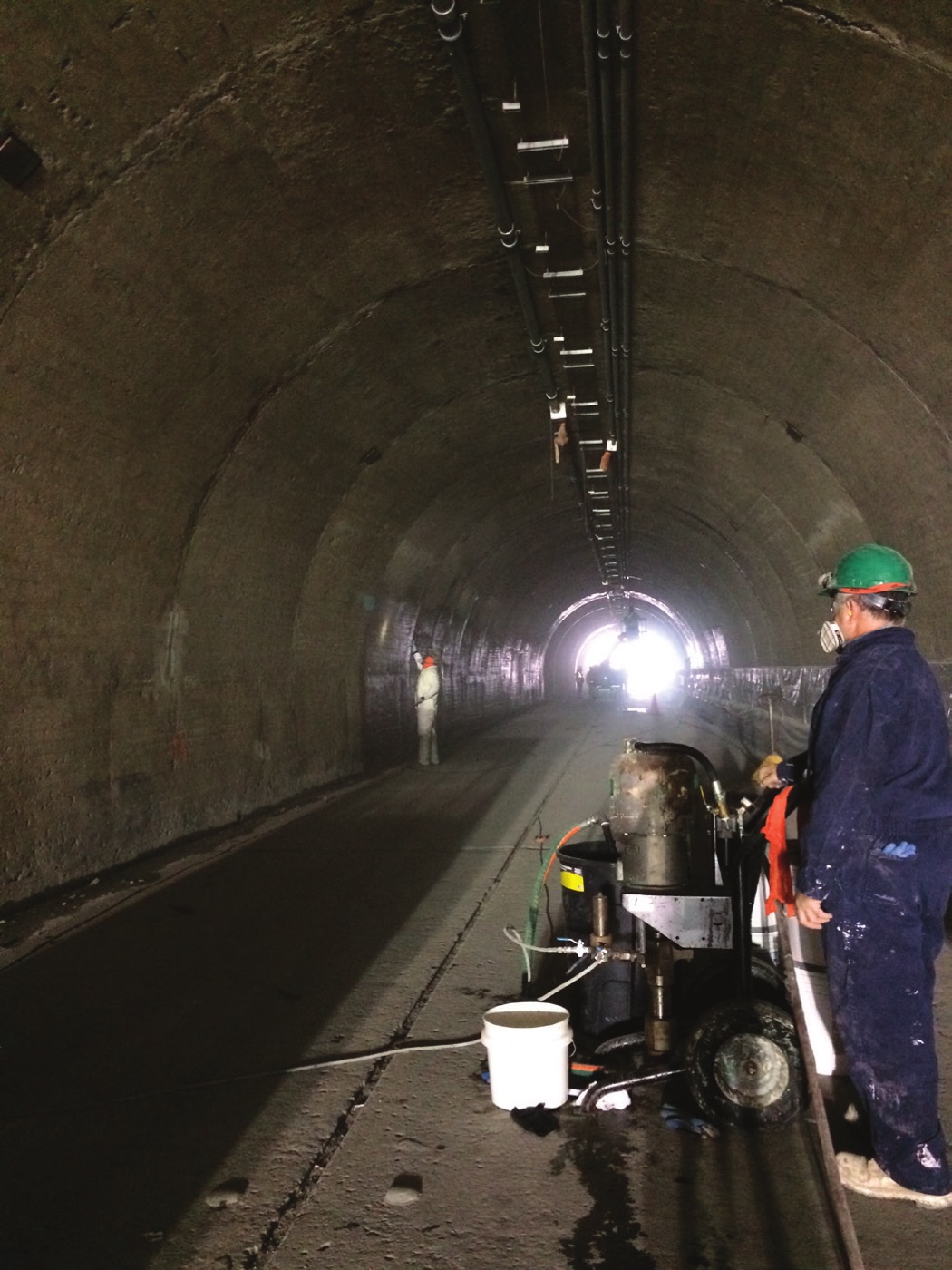
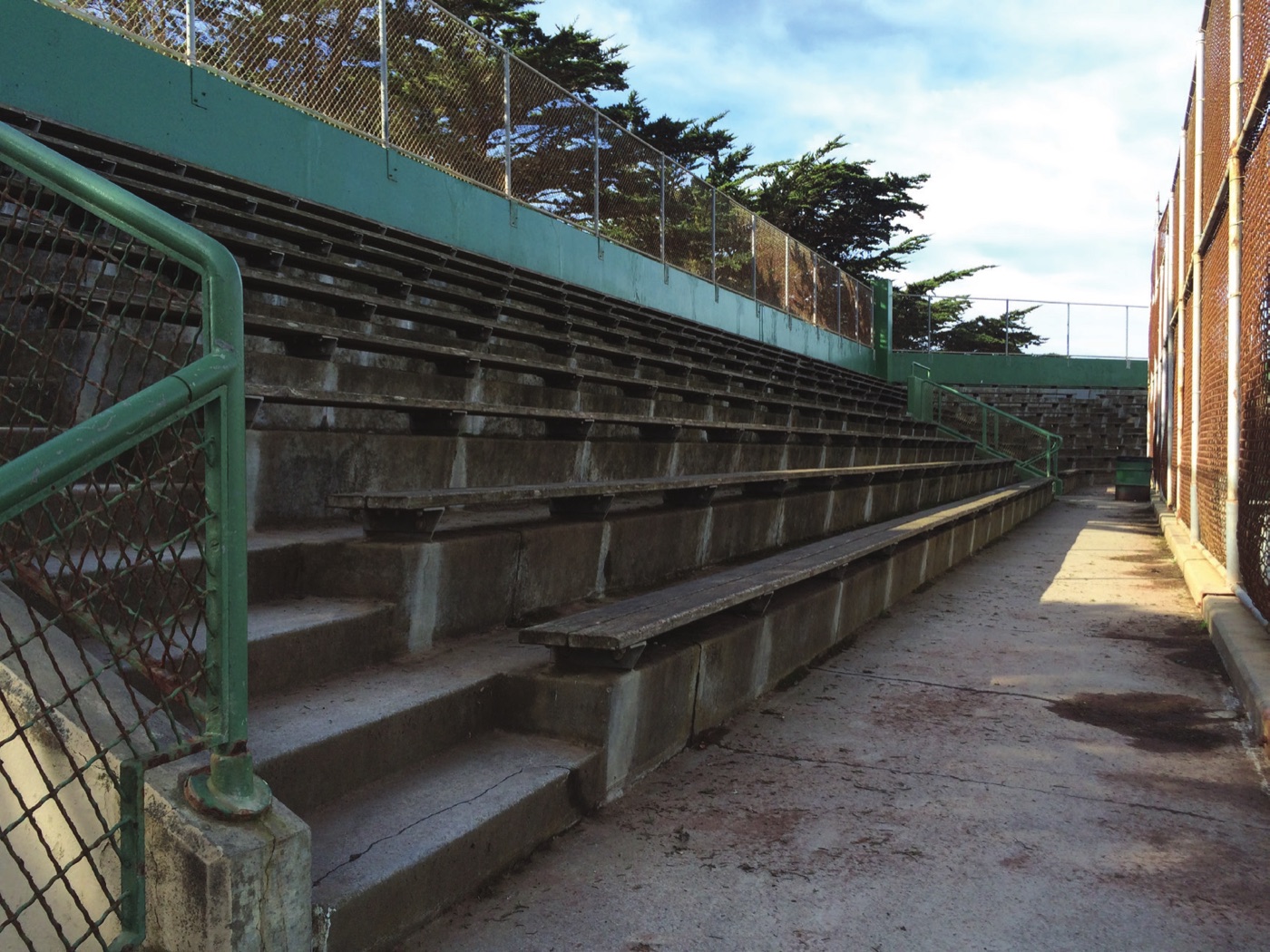
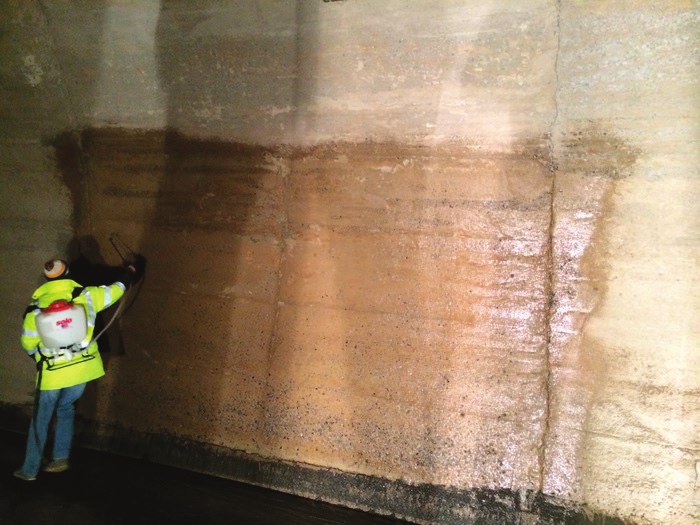
Ceramic System PoreBlocker™ documents
Questions
It is a water-based colloidal treatment that travels into the accessible capillary network rather than sitting on the surface. Once inside, it reacts with free portlandite, the calcium hydroxide left over from cement hydration, and converts it into calcium aluminosilicate hydrate (C-A-S-H). The weakest phase of the cement matrix becomes a durable one, the pore network tightens, and pore-solution pH is restored into the 11.5 to 12.5 range that keeps embedded steel passive.
On weathered, in-service concrete with a developed capillary system, penetration of 4 to 6 inches is documented. That qualifier matters and is always attached: fresh concrete has not developed the same capillarity, so the same depth is not claimed for a new pour. Depth on any given asset depends on the porosity of that concrete.
A colloidal silica densifier is typically 20 to 50 nm or larger and has no aluminum in it, so its single pozzolanic step builds plain C-S-H near the surface. PoreBlocker particles are roughly 5 to 10 nm and are aluminate doped, so they build a crosslinked C-A-S-H network instead. The aluminate sites are what give the matrix its chloride binding capacity, which a plain silicate densifier does not have.
It is a chemistry, not a structural repair. Passive hairline microcracks are re-bonded in place, but wider cracks, any actively moving or structural crack, delamination, or exposed corroded rebar need structural repair first, with the ceramic system applied afterward as the protective layer. It is also a concrete treatment only. Zirconia does not sell a steel treatment.
It is a penetrating treatment rather than a film, so there is no coating layer left on top to peel or discolor, and the treated concrete performs comparably to moisture cured concrete with lower permeability and a denser surface. That is the point of applying it first: CeramycGuard™ then bonds into a denser, contaminant-free, C-A-S-H rich surface instead of into aged paste. Allow a minimum of 24 hours before topcoating.
Talk to our technical team about the substrate you are treating, the exposure it faces, and the right sequence for the asset.