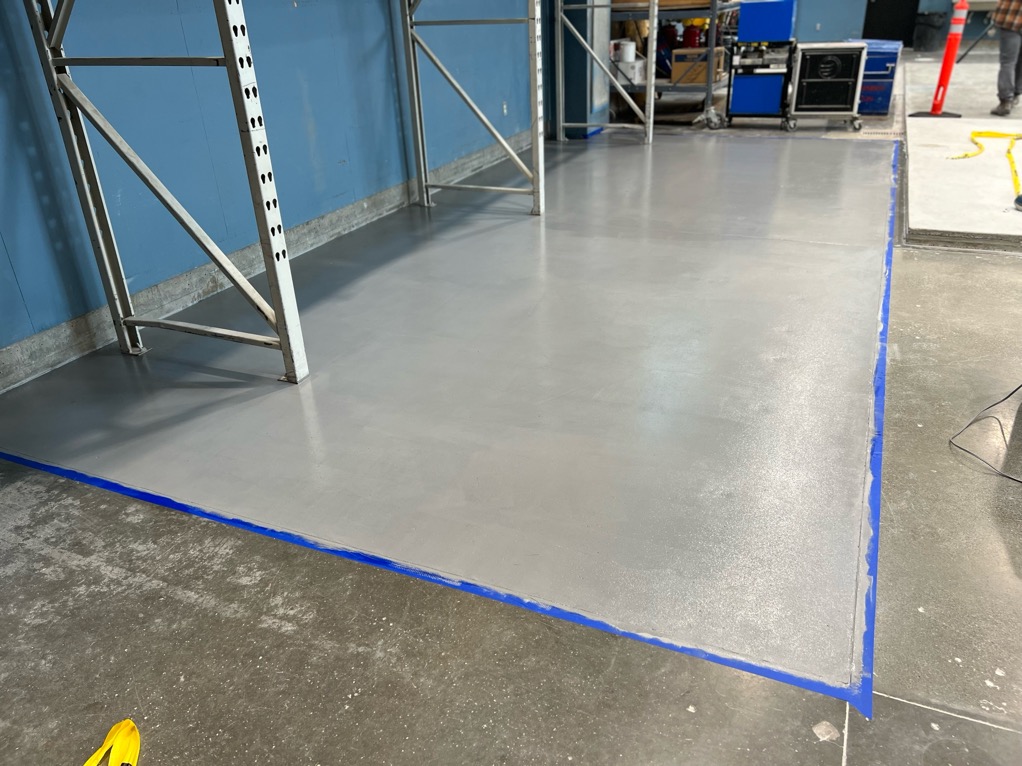
The silane modified urethane hybrid topcoat that cross-links with CeramycGuard™ to form a true composite coating system, bringing the best of inorganic and organic technology into a single, permanent protective layer.
The ideal topcoat where chemical resistance and toughness are needed
BulletProof™ is engineered for applications where a surface must resist aggressive
chemical attack while also standing up to daily physical wear. As a silane modified
urethane hybrid, it chemically bonds with Zirconia's inorganic CeramycGuard™ base coat.
The two coats cross-link into one composite, so the chemical resistance and bond strength
come from the whole system, not either coat alone.
When CeramycGuard™ reacts with the concrete substrate and BulletProof™ cross-links
directly with CeramycGuard™, the result is one composite with no adhesive interface to
fail, no film to peel, and no flake to lift.
BulletProof™ also functions as a waterproof vapor barrier, provides protection against
moisture and humidity, and presents a surface that is straightforward to clean, maintain,
and spot repair if localized damage occurs. Compared with the traditional epoxies and
urethanes it competes against, it offers superior wear and abrasion resistance, and it is
not affected by freeze/thaw cycles.
Concrete offers a coating a poor surface to hold on to
Concrete is porous and its surface is chemically unstable. Water and moisture drive
chemicals into it, and the traditional answer has been a film laid over the top:
an epoxy, a urethane, a paint. Those are organic plastics that cannot chemically bond
with concrete. They grip its surface texture and nothing more, which is a mechanical
hold, not a chemical one.
The consequences are familiar to anyone who maintains a slab. The film is vulnerable to
UV sunlight, and it cannot breathe out water vapor trapped beneath it, so it degrades
and peels. Once it lifts, moisture and chemicals reach the concrete again and the
underlying sequence resumes: carbonation, biological growth, corrosion, cracking, rebar
rusting, spalling and eventually failure of the concrete itself.
The solution
Bond into the concrete, then bond into that
The two-coat composite gives an owner the best of both chemistries. CeramycGuard™
chemically bonds to the concrete surface, creating a layer that will not peel, flake,
chalk or deteriorate. BulletProof™ then cross-links into it. Because the assembly is
chemically bonded to the concrete rather than stuck to it, moisture movement and
freezing temperatures have no interface to separate.
What the owner gets is exceptional toughness from the wear resistance of the inorganic
ceramic chemistry, combined with the chemical resistance of the dense organic chemistry.
That combination is what makes the system suitable for industrial service, and it
strengthens, preserves and protects concrete in a way a surface film cannot.
Key benefits
What makes BulletProof different
True composite system
BulletProof™ chemically bonds with the CeramycGuard™ inorganic base coat, uniting the best of inorganic and organic coating technology into one high-performance composite. The toughness comes from the ceramic side and the chemical resistance from the dense organic side, and the asset gets both at once.
Extreme crosslinking density
The direct cross-link between BulletProof™ and CeramycGuard™ creates an exceptionally dense molecular network, delivering higher levels of chemical resistance than either coating alone. A denser network simply gives an aggressive liquid less to travel through.
Permanent chemical bond
Because the system begins with an inorganic base that chemically reacts with the concrete, there is no weak interface. The coating system cannot peel, flake, or delaminate under service conditions, and moisture movement or freezing temperatures have no bond line to attack.
Waterproof vapor barrier
BulletProof™ seals the surface against moisture ingress and humidity, protecting the substrate and whatever the structure contains. That matters most in cold storage, wash-down areas and containment, where the water is constant and the cost of a failure is the product inside.
The wear layer
The surface you can see is not the layer doing the work
This is the detail most often missed on a specification. BulletProof™ presents a polymer
sheen at the very surface, but that sheen is not what carries service life. Beneath it
sits a dense, matte gray, ceramic-organic composite layer, and that is the working wear
layer. It is built to take extreme wear and chemical attack, and under the conditions
Zirconia has tested it, it does not peel, chip or crack.
The wet acid abrasion test is where that behavior shows up. Coated concrete is run through
abrasive scrub cycles while saturated with food acid, which is about as unkind a
combination as a food plant floor ever sees. At 10,000 scrub cycles the sheen had worn
only over the high points of the surface profile, exposing the matte composite layer
underneath. That layer remained intact. It remained cleanable and easy to maintain. It
remained a protective, anti-corrosive barrier for the concrete, and the majority of the
surface in the low points was unaffected by the food acid.
A Novolac epoxy control put through the same 10,000 scrubs did not wear, it failed. It
disbonded from the concrete and lost structural integrity in the epoxy film. That is the
difference between a coating that erodes gracefully and one that comes off. Two practical
consequences follow for a facilities manager: BulletProof maintains a good coefficient of
friction for non-slip as the composite wears, and damaged areas can be spot repaired
rather than triggering a full re-coat of the asset.
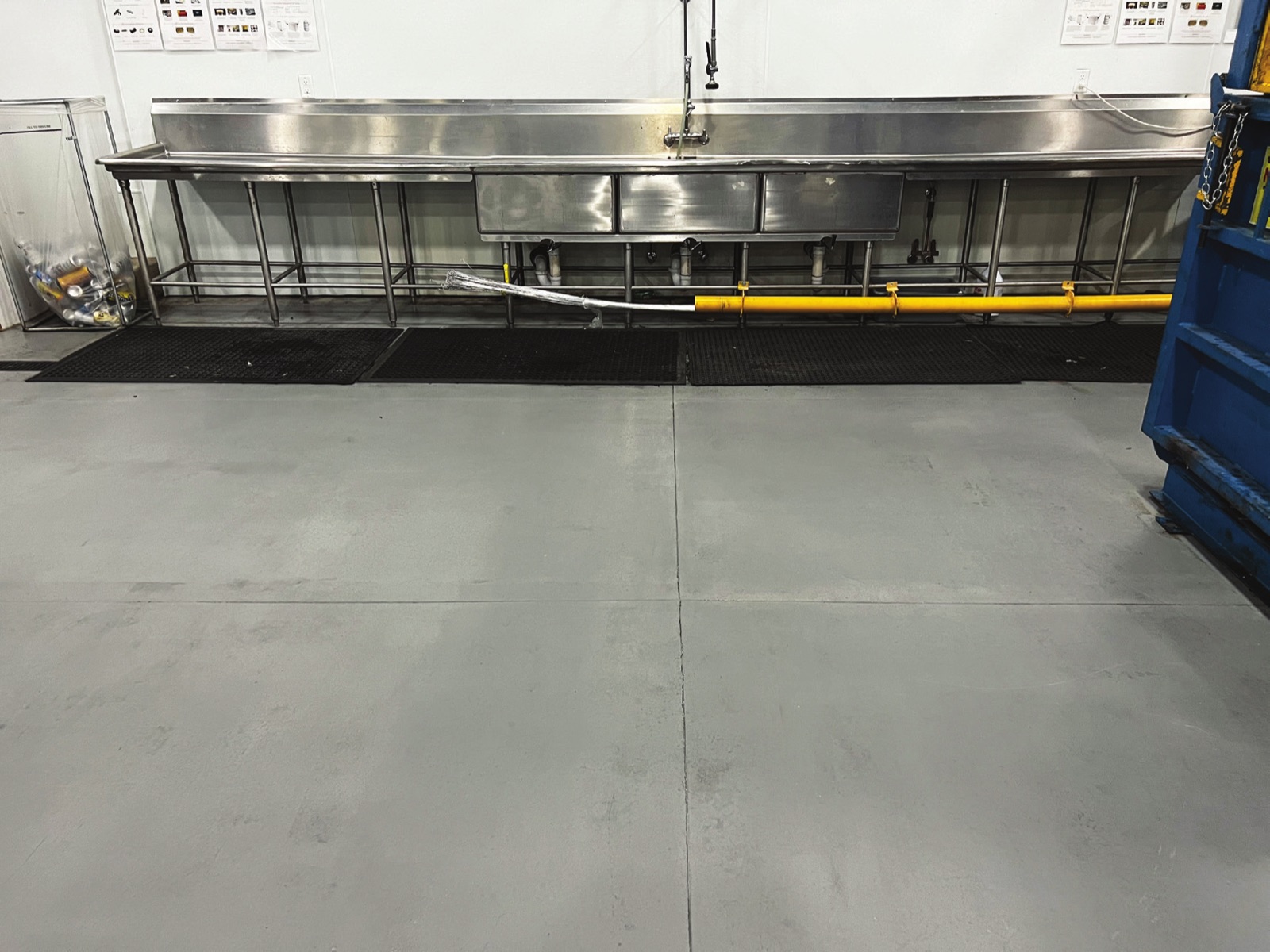
A food preparation and wash-down room finished with the composite system. Wash-down,
food acid and constant foot traffic all act on the same slab.
Test record
What Zirconia's own testing recorded
Each result below is quoted with the conditions it was measured under, and none of them is
generalized past those conditions.
Freeze/thaw at minus 100 degrees Fahrenheit
Prepared samples were held in a dry ice bath below minus 100 degrees Fahrenheit over a
three-day period. The same set of samples went through that test three times with no
apparent damage. Zirconia attributes it to the dense molecular bonding between the
concrete, the ceramic and the organic phases, which can expand and contract without
damage and leaves nothing to disbond.
Pull test above 1,000 PSI
The industry standard pull test breaks out a chunk of the concrete itself, at over
1,000 PSI. Failing in the substrate rather than at the bond line is the ideal result,
because it is what verifies that a true composite has formed instead of a coating
stuck to a surface.
Hydrochloric acid immersion, ongoing
A coated red clay brick is submerged in 10 percent hydrochloric acid for nine hours a
day. At the time the product sheet was written that test had reached 234 hours, or 26
days, without failure, and it was still running.
Wet acid abrasion at 10,000 scrubs
Coated concrete scrubbed under food acid saturation. The polymer sheen wore at the high
points, exposing the ceramic-organic composite layer, which stayed intact, cleanable
and protective. The Novolac epoxy control disbonded from the concrete at the same
10,000 cycles.
Recommended uses
Where BulletProof protects assets
Food manufacturing and cold storage
Zirconia documents BulletProof™ on food manufacturing facilities and on cold storage walls, floors and ceilings, where food acids, daily wash-down and freeze cycles all act on the same slab. The finish stays cleanable and easy to maintain.
Commercial flooring
Loading docks, distribution centers and parking ramps take wheel loads, dropped freight and weather carried in from outside. Impact and abrasion resistance, plus a coefficient of friction that holds up as the surface wears, are what the specification is really buying.
General construction
Condominiums, parking garages, hangars, manufacturing plants and warehousing. These are large slabs where recoating is disruptive and expensive, so a topcoat that spot repairs rather than lifting is worth more than the gallon price suggests.
Infrastructure
Wastewater, stormwater, bridges and dams, for concrete anti-corrosion and anti-weathering duty. Superior salt resistance that prevents ingress and resistance to heat, humidity and wind-driven rain are the properties that carry the asset.
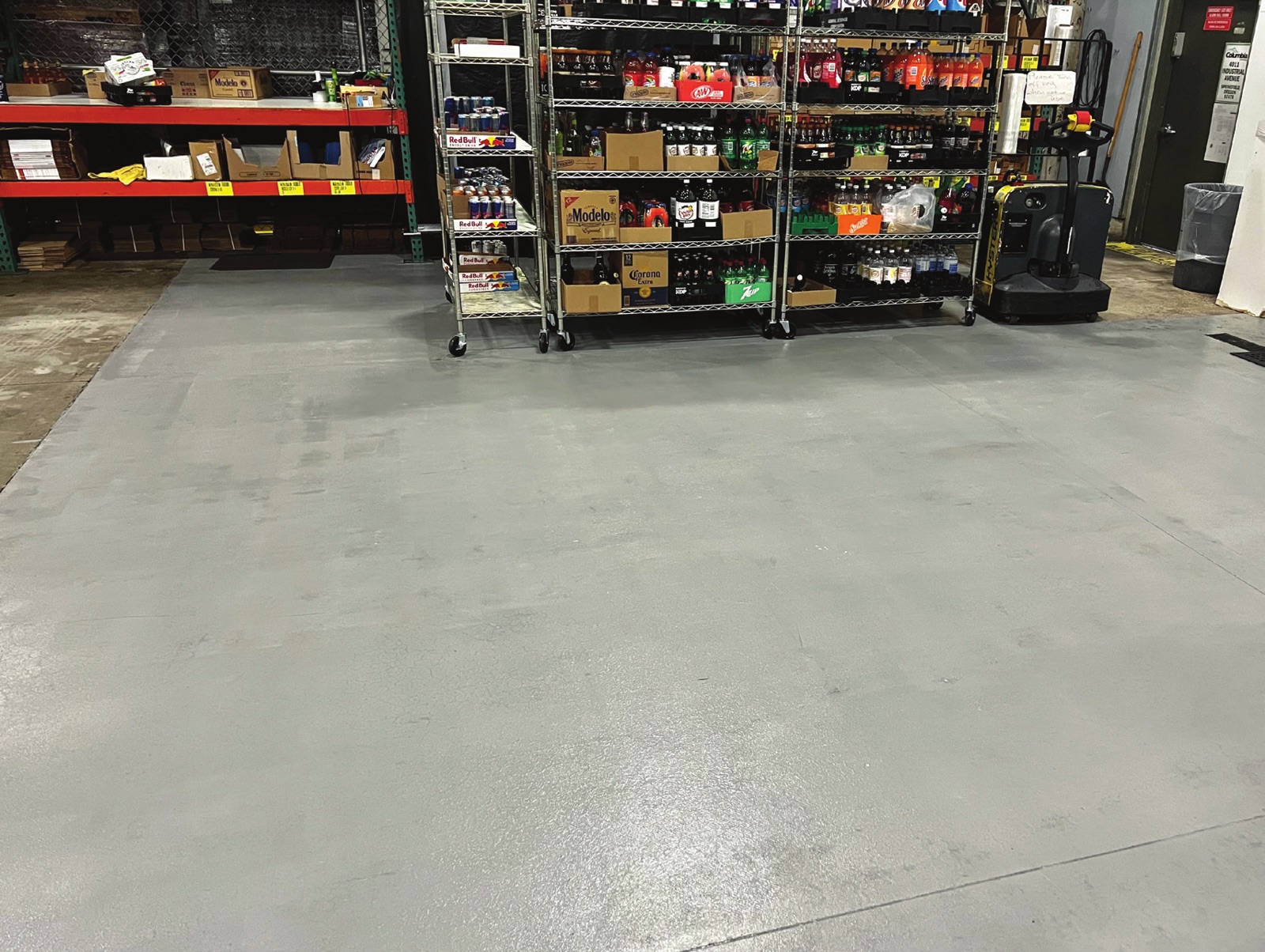
A beverage distribution warehouse floor. Benjamin Cook names Columbia Distribution as a
BulletProof project in the beverage distribution spotlight Zirconia publishes.
What this page does not claim
BulletProof™ carries a high VOC and uses a midrange solvent. That is stated plainly here
because Zirconia states VOC per product and never as an umbrella claim across the line:
ActiveCure™ and Ceramic System PoreBlocker™ are zero VOC, CeramycGuard™ is near zero,
Fortress XD™ is low, and BulletProof is the high one. Full VOC and safety detail lives in
this product's technical data sheet and safety data sheet, and the safety data sheet should
be read before use.
The 15-year warranty that attaches to Fortress XD™, on a spec-compliant installation of the
full stack, is a Fortress XD term. It is not transferred to BulletProof here. If your
exposure sits outside the conditions described on this page, that is a conversation with the
technical team rather than a number to read off a web page.