
Products
Anti-corrosion
Industrial & floors
Curing agent
Concrete sealers
Residential
Anti-corrosion
Industrial & floors
Curing agent
Concrete sealers
Residential
Anti-corrosion coatings
Build, corrode, demolish, repeat. The concrete corrosion cycle bankrupts municipalities and creates massive carbon emissions. Ceramic Surface Treatment breaks the cycle.
Ceramic Surface Treatments (CST)
Concrete is highly porous and chemically susceptible to corrosion. Corrosion takes place quickly at the surface, mainly due to carbonation, salts and freeze-thaw effects. Porosity and internal capillary void space allow penetration of contaminants, which eat away at the cement binder that protects the steel rebar reinforcement from within.
Surface treatment with CeramycGuard™ can stop the corrosion cycle. It disallows ingress of contaminants and protects the surface from chemical and physical attack. Ideal for new and existing concrete, it restores, repairs and durably protects assets. Ceramic Surface Treatments will not delaminate and are immune to common causes of corrosion and degradation: salts, carbonation, UV, moisture and thermal cycling.
CeramycGuard is a brush and roll application that heals and seals concrete, transforming the surface into a chemically bonded geopolymer composite.
Under the microscope (50x)
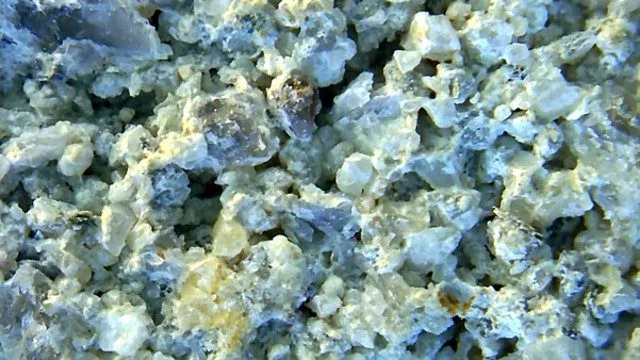
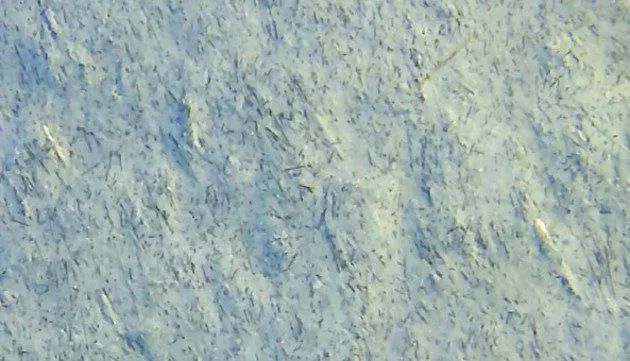
Geopolymers stand the test of time.
Geopolymer technology was first used by the ancient Egyptians around 2,600 BC, then adopted and improved by the Romans. Geopolymer cement is an analog of granite, or man-made stone. It let the Romans build aqueducts, temples and the Colosseum, structures still standing today, having stood strong against the weathering that so quickly decays modern hydrating cements.
Geopolymers are alumina-silica ceramic polymers: durable and inert, yet flexible. The tetrahedral polymer spirals like a coiled spring, letting the structure expand and contract with temperature swings without damage. Zirconia's use of nano and micro scale particles lets the coating cure at room temperature, with no kiln needed.
With one treatment, previously vulnerable hydrating cement becomes chemically and physically stabilized, just like the Roman cements still standing after thousands of years. Zirconia's geopolymer coating transfers its extreme longevity to the weaker concrete asset.
Talk to our technical team about the right ceramic surface treatment for your concrete or steel infrastructure.